Returning to Cambodia: coming home, from the people who did
Hundreds of thousands of people of Cambodian origin live in the United States, France, Australia and Canada, and some of them are coming back. Here is what moving home takes, with the facts checked at their source and the people who made the move in their own words.
At a glance
- Can I move back?
- Yes. On a Cambodian passport you need no visa, and a Cambodian national needs no work permit. On a foreign passport, if a parent is Cambodian, you can get the K visa, free at most embassies. More
- How many live abroad?
- 410,445 people in the US are Cambodian alone or with another group (2025); 57,096 Australians have Khmer ancestry and 41,950 Canadians a Cambodian origin (2021). More
- Am I Cambodian?
- If your father or mother is Cambodian, yes, wherever you were born, and you can keep your other nationality. More
- Work permit?
- Not for a Cambodian national. On a K visa with a foreign passport, you apply for one like any foreigner. More
- Your belongings
- Household goods and personal effects come in free of duty and tax when you move your home here. Motor vehicles don't. More
- US Social Security
- Paid to US citizens living in Cambodia. Someone who is not a US citizen generally loses it after more than six months in a row outside the US. More
- US taxes
- Generally yes, as a US citizen: you are taxed on worldwide income, and up to $132,900 earned abroad can be excluded for 2026 if you qualify. More
- Where returnees live
- Bunika San went home to Kampot, where he was born; Sopheak Lach grew up in Phnom Penh. Towns, rents and schools are in our where-to-live guide. More
- Schools
- Phnom Penh has most of the international schools we found; our where-to-live guide names them. More
- Deported from the US?
- More than 1,000 people were sent to Cambodia between a 2002 agreement and 2023. KVAO helps on arrival, at no cost. More
The short answer
Yes, and with less paperwork than a foreigner. On a Cambodian passport you need no visa, and as a Cambodian national you need no work permit. If you travel on a foreign passport and a parent is Cambodian, the K visa, free at most embassies, lets you come and go and stay. It used to last until the passport expired; since visas went electronic on 3 October 2026, ask the embassy how long yours lasts. Who counts as Cambodian, and the K visa embassy by embassy, are in our guide to citizenship and the K visa.
The rest is the move itself: your papers, money, belongings and a place to live, each covered below. First, the people who did it.
Who comes back, and why
Many guests on Good Morning Cambodia were born here, left, and came back, or were born abroad to parents who had left. Their stories fall into three groups.
Those who left, and came back in the 1990s. Sokoun Chanpreda was born in Battambang, grew up in Thailand from 1970, and was studying at Boston University in 1992 when two American friends suggested three months of volunteer work in Cambodia (5:40). The three months became three years (6:26); today he is a leader in luxury hotels. Ted Ngoy, who arrived in California as a refugee in 1975 and built a donut business there, came back in 1992 (25:24). Bunika San, who also ran donut shops in California, moved back in 1995-96 (22:48).
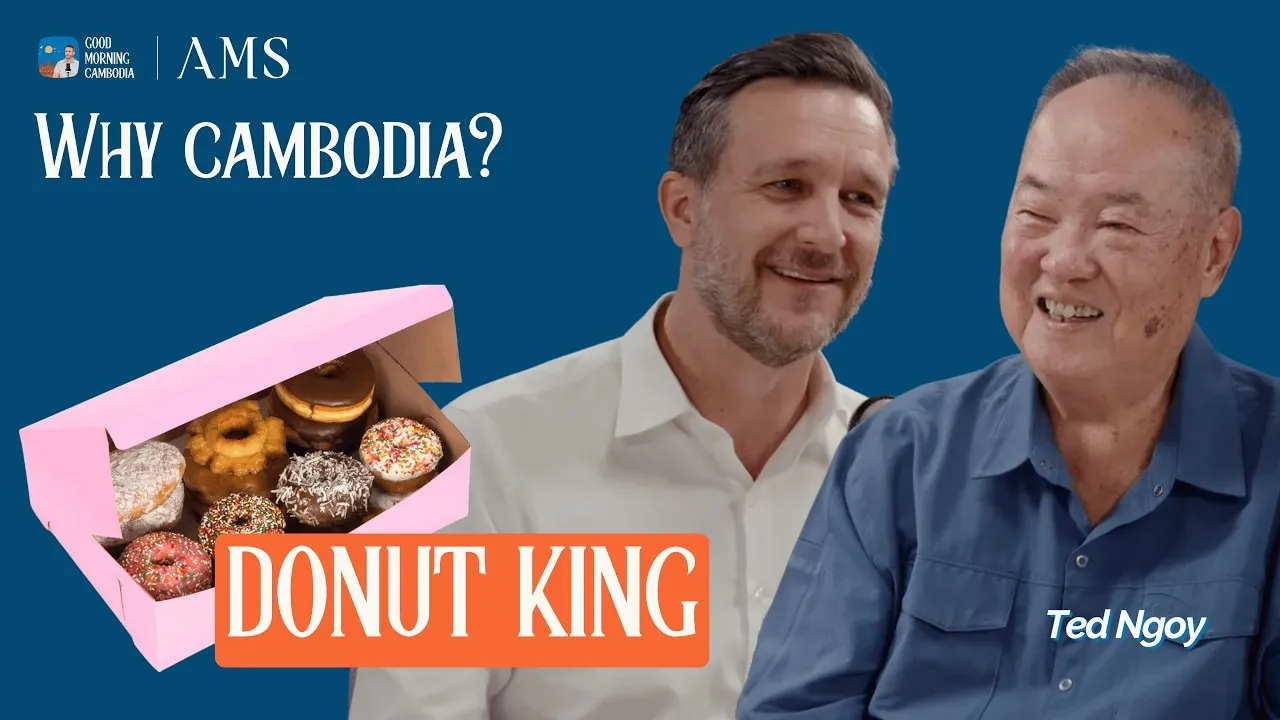
 Ted Ngoy, California's "Donut King", from the cover art of his episode. He came back to Cambodia in 1992.
Others came back from the camps on the Thai border. Sopheak Lach, now an artist, was born in one, and her family moved to Phnom Penh before her first birthday:
when my family moved back to Cambodia and we kind of don't know what to start the life because you were living as refugees in the refugee camp with really nothing
Sopheak Lach, artist · 1:53
Raised abroad. Keo Sar counts himself among "generation 1.5": born in a refugee camp in Thailand, he passed through a refugee processing centre in the Philippines and grew up in San Diego (the video above). At home his parents spoke Khmer; outside it was English, and he says that left him unsure where he belonged:
you're mostly exposed to this American culture and sometimes you don't actually know where you fit in.
His first trip to Cambodia came in 2008, alone and still at university. Outside the airport a cousin held up his name, and beside him stood an uncle who looked exactly like his father (25:40). Victor La, born in Vietnam to a father from Battambang, grew up in Canada and first came to Cambodia in 2019. He opened an office here in February 2020 and stayed (6:25).
Back from studying abroad. Haklao Chheuy, a licensed tour guide, applied in 2019 for a Chevening scholarship, won it, and studied tourism management in Bournemouth, in England, in 2020-21 (11:04). He came home in January 2022 (14:32). People asked him why he didn't look for opportunities elsewhere:
Cambodia is a it is a developing country. It has a lot of opportunities here that I can contribute to.
Haklao Chheuy, licensed tour guide · 45:20
The Cambodian diaspora in numbers
Each country counts people of Cambodian origin its own way, so the figures don't add up to one total:
| Country | People | What is counted |
|---|---|---|
| United States | 410,445 | Cambodian alone or with another group, 2025source 1 |
| Australia | 57,096 | Khmer ancestry, 2021; 39,043 were born in Cambodiasource 2 |
| France | 49,800 | Immigrants born in Cambodia, 2019; children born in France are not countedsource 3 |
| Canada | 41,950 | Cambodian (Khmer) origin, 2021source 4 |
| New Zealand | 11,514 | Cambodian ethnic group, 2023source 5 |
There is no single count of the Cambodian diaspora, and Cambodia has no comprehensive diaspora strategy. UN figures put the largest group of Cambodian emigrants in Thailand: 375,635 in 2024source 6.
Papers first: are you Cambodian?
If your father or mother is Cambodian, you are Cambodian too, wherever you were born, and Cambodia lets you keep your other nationality. Proving it from abroad takes time, which is why many returnees first come in on the K visa. Our guide to citizenship and the K visa covers who counts as Cambodian, dual nationality, the K visa at each embassy, and how to get a Cambodian ID card and passport. A foreign husband or wife can't get the K visa and comes in on another visa: see our visa guide.
Work and business
A Cambodian national needs no work permit: the Labour Law's permit rule is written for foreignerssource 7. On a foreign passport and a K visa, in practice you need a work permit like any foreign employeesource 8; our visa guide explains how.
The returnees on the show work in everything. Bunika San grows durian on nearly 1,000 trees in Kampot (3:58); Sokoun Chanpreda went from volunteer work and early businesses into hotels; Victor La helps Cambodian businesses get ready for investors; Haklao Chheuy works as a tour guide and travel agent. Registering a company, what it costs and the taxes it pays are in our guide to starting a business.
Money: banking, taxes, pensions
US Social Security keeps paying US citizens who live in Cambodia. A beneficiary who is not a US citizen generally loses payments after more than six months in a row outside the US, unless an exception appliessource 9.
US taxes. A US citizen living in Cambodia generally still files a US return, and is taxed on worldwide incomesource 10. If you qualify, the foreign earned income exclusion leaves out up to $132,900 earned abroad in tax year 2026source 11. If your accounts outside the US together go over $10,000 at any time in the year, you report them on an FBARsource 12. The US has no income tax treaty with Cambodiasource 13. Check your own case with a tax adviser.
A bank account. With Cambodian papers it is simple: ABA Bank asks Cambodians for a national ID card or passport, and ACLEDA Bank for an ID card, a passport valid for three more months, or a family book. On a foreign passport, ABA asks for a visa, or consecutive visas, covering at least six months, or a lease or job of at least six months, and ACLEDA for a residence document certified by the local authority or an employment contractsource 14. ABA's account opened in its app is for Cambodian nationals onlysource 15. Most prices are in US dollars, and the riel is the official currency: see your first month. Sending money from abroad, or moving your savings: our guide to sending money to Cambodia.
Bringing your belongings
When you move your home to Cambodia, your household goods and personal effects come in free of customs duty and tax. The rule covers "persons changing residence to Cambodia", whatever their nationality, asks for proof of the move, and lets the customs department set the quantities; motor vehicles, such as cars and motorbikes, are not includedsource 16.
A pet. Cambodian customs clears a dog or cat on a summary declaration with its health certificate, pet passport and vaccination record, the owner's passport or ID and the transport documentssource 17. Cambodia is not on the US Department of Agriculture's pet-travel country list; for such countries it advises a USDA-endorsed health certificate and proof of a current rabies vaccinationsource 18. Ask the Cambodian embassy before you book. Our shipping guide has the customs permit, cars, pets, freight and costs.
Where returnees live
Bunika San went home to Kampot, where he was born, rather than retire with nothing to do (22:16). Sopheak Lach grew up in Phnom Penh, and Victor La spent a year in Sihanoukville getting to know its market (43:31). Towns, districts and rents are in our guide to where to live; costs and healthcare are in the retirement guide.
Family, language and fitting in
Coming home isn't only paperwork. Keo Sar grew up with Khmer at home and English outside. His father helped build a Khmer school at the temple in San Diego; Keo complained about the early weekend classes, then came to value how his parents kept the language alive (15:44). In 2015 NBC News profiled four returnees. One of them, Remy Hou, who had left for America in 1990, was relearning to read and write Khmer as an adult, and market vendors charged him the foreign ratesource 19.
Our guide to learning Khmer lists classes in Cambodia and the US, apps and their prices.
Schools for your children
Phnom Penh has most of the international schools we found. Our guide to where to live names them, says which teach the IB, and where they are; fees are on each school's own site.
If you were deported from the US
Between a 2002 agreement and 2023, the United States deported more than 1,000 Cambodians, many of whom had come to the US as refugees; in January 2025, 1,747 more had final removal orderssource 20. The Khmer Vulnerability Aid Organization (KVAO), formerly the Returnee Integration Support Center, helps people who arrive this way: orientation, documents, job search, temporary housing and medical referrals, at no costsource 21. Most of its funding came from US aid, and in February 2025 none had arrived for weeks, so ask what it can offer nowsource 22.
Questions
Can I move back to Cambodia if I was born abroad?
Yes. If your father or mother is Cambodian, you are Cambodian wherever you were born. See "Papers first: are you Cambodian?" above.
Do I need a visa?
Not on a Cambodian passport. On a foreign passport, if a parent is Cambodian, you can get the K visa from an embassy, free at most of them.
Do I need a work permit?
Not as a Cambodian national. On a K visa and a foreign passport, yes.
Can I bring my things duty-free?
Your household goods and personal effects, yes, when you move your home here; not a car, motorbike or other motor vehicle. See our shipping guide.
Will I keep my US Social Security?
Yes, if you are a US citizen.
Do I still file US taxes?
Generally yes, if you are a US citizen: the US taxes its citizens on worldwide income wherever they live. See "Money: banking, taxes, pensions" above.
Can I own land?
A Cambodian national can; a foreigner can't, though a foreigner can own a condo (see our property guide). Land, military service and the other rights and duties of a Cambodian are in our citizenship guide; titles and inheriting family land are in our family land guide.
Should I visit first?
Two of our guests came for a short stay first: Victor La made a four-day trip in 2019 to scout an office and moved here to open it in February 2020; Sokoun Chanpreda came in 1992 for three months of volunteer work and stayed three years. Our guide to moving to Cambodia covers what to sort before you fly.
Ask us
Thinking of coming home? Tell us where you are and what you are weighing, and we reply by email.
The conversations on this page
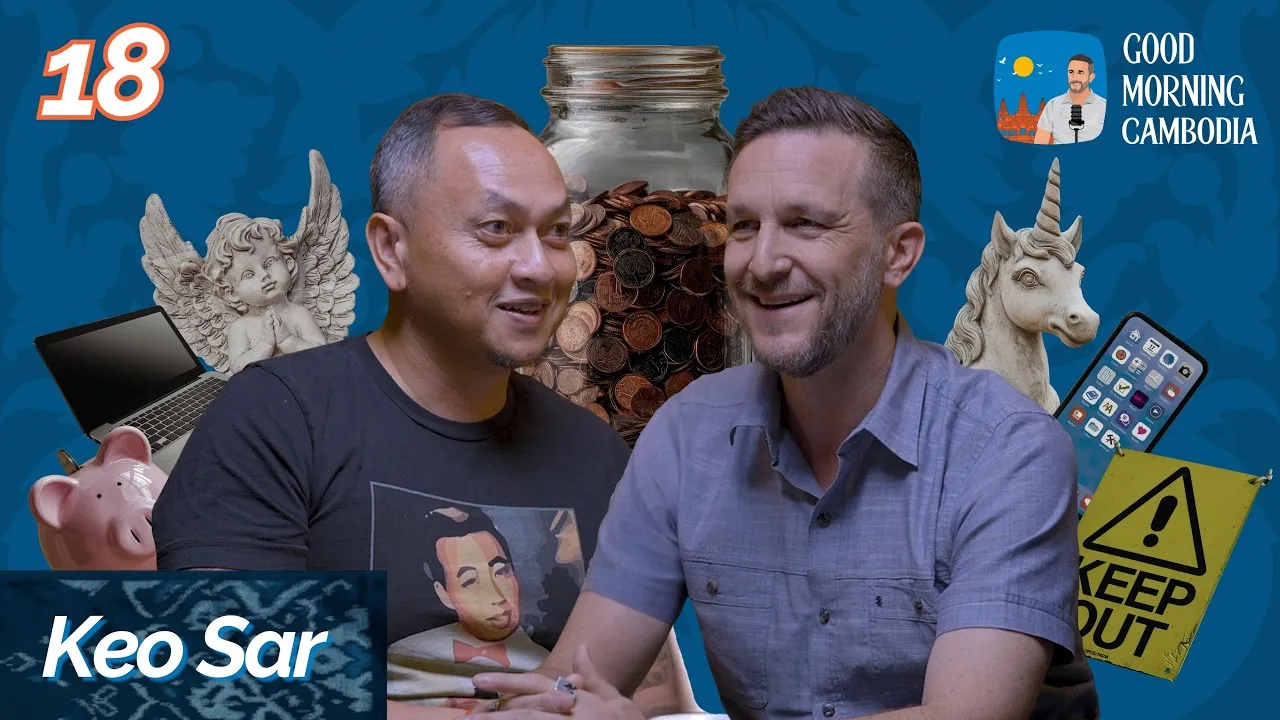 1:24:15 S1 · Episode 18
Keo Sar: from a refugee camp to an $8 billion IPO
 55:38 S1 · Episode 20
Sopheak Lach on Cambodia's golden age of music, fashion and culture
 57:19 S1 · Episode 2
Haklao Chheuy: a tour guide's Cambodia beyond Angkor Wat
 55:31 S1 · Episode 11
Sokoun Chanpreda: Cambodia is not the country most people think
 37:32 S2 · Episode 2
Ted Ngoy: from refugee to California's Donut King
 1:05:26 S1 · Episode 19
Bunika San: from Southern California to Cambodian agriculture
 1:04:50 S1 · Episode 13
Victor La on getting Cambodian businesses ready for investors
Sources (22)
- 1US Census Bureau, ACS 2025, table B02018
- 2Australian Bureau of Statistics, 2021 Census
- 3INSEE, 2019 census
- 4Statistics Canada, table 98-10-0356-01
- 5Stats NZ, via Figure.NZ
- 6EU Global Diaspora Facility, Cambodia factsheet, 2026
- 7B2B Asia News, with Sciaroni & Associates, 2016
- 8B2B Asia News, 2016; DFDL, January 2025
- 9Social Security Administration, POMS RS 02650.060
- 10IRS, filing requirements abroad; IRS, citizens abroad
- 11IRS, October 2025
- 12IRS, FBAR
- 13IRS, tax treaties A to Z
- 14ABA Bank, savings account; ACLEDA Bank, deposits
- 15ABA Bank, instant account
- 16Ministry of Economy and Finance, Prakas 114, 2008
- 17GDCE manual, January 2025
- 18USDA APHIS, country list; USDA APHIS, unknown requirements
- 19NBC News, April 2015
- 20Cambodianess, January 2025; NPR, December 2018
- 21KVAO
- 22KYW Newsradio, February 2025