Keo Sar: from a refugee camp to an $8 billion IPO
With Keo Sar
About this episode
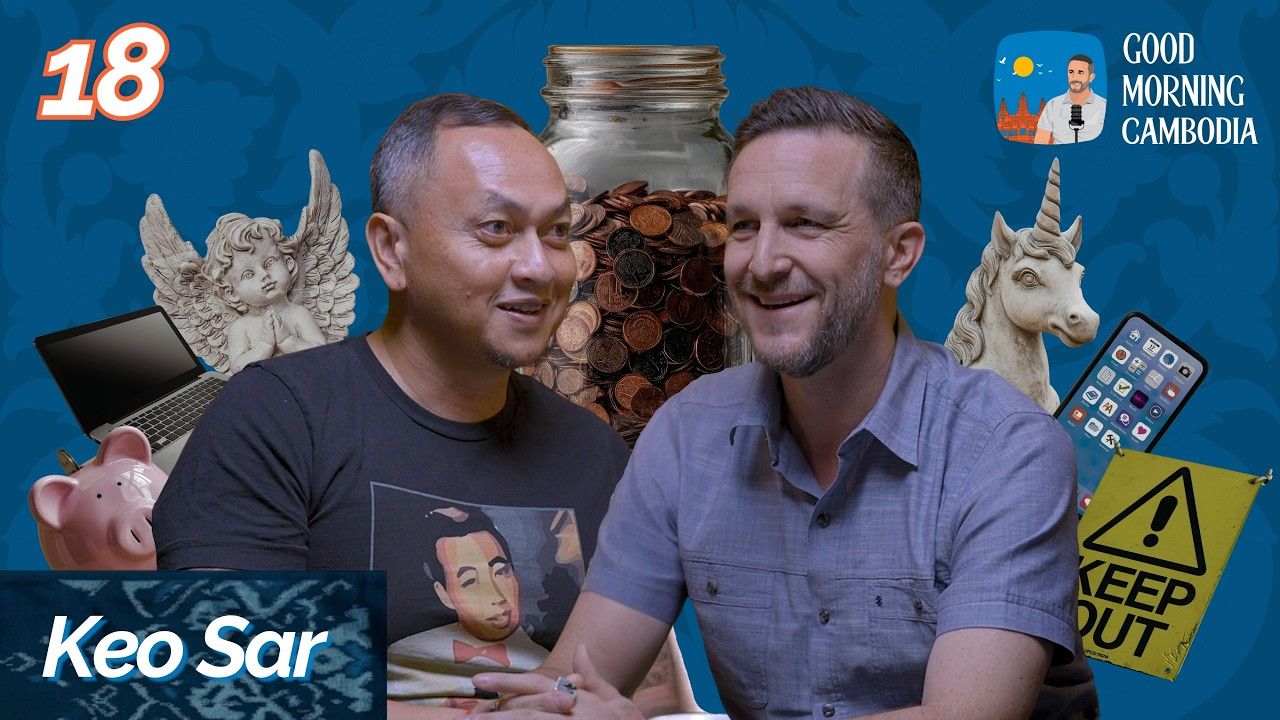
Born in a refugee camp and raised in San Diego, Keo’s life has been a "windy road" of resilience and adaptation. From working full-time at Best Buy to survive university, to being at the stock exchange for an $8 billion fintech debut, his story is the definition of grit.
In this episode of Good Morning Cambodia, host Jesse McCaul sits down with the seasoned entrepreneur and investor Keo Sar to discuss the "man behind the mission". Talk about his transition from corporate banking at Wells Fargo to the high-stakes world of startups, the personal tragedy that made him rethink his purpose, and why he has returned to Cambodia to empower the next generation of founders.
Where the stories happened
See them on the story map →Chapters
- 0:00Introduction
- 3:11Born in a refugee camp in Thailand
- 4:56Working through university in San Francisco
- 7:18Fintech startups, Serbia and a sabbatical
- 13:10Growing up Khmer in San Diego
- 24:43First trip to Cambodia in 2008
- 40:09Quitting his job to live in Phnom Penh
- 57:16Entrepreneur in residence with Swisscontact
- 1:06:54What Cambodian startup founders need
- 1:18:56How Cambodia has changed since 2008
From the conversation
I was born in a refugee camp in Thailand because my parents you know fled the conflict at that time and you know we spent several years there then I got transferred to the Philippines at a refugee processing center
And then next to him was someone who looked exactly like my dad. I was like, that's got to be my uncle.
because the way I kind of look at the world like you shouldn't be penalized for where you're born, right? and I think opportunities or I mean talent is equally distributed but opportunities and access aren't.
Read the full transcript
0:12 Greetings from the Kingdom of Cambodia. We are alive and well and we are excited to have you with us. Welcome to our world. Good morning, Cambodia. And we have another wonderful day of intriguing, insightful conversations.
0:29 Don't miss it. You're in for a treat today. And it's great to have you with us, brother Keo Sar. And Brother Keo, it's great to have you originally from San Diego or San Diego's home. San Diego, California is home for you. And it's great to catch you while you're here in Cambodia. So, welcome. I guess we should pleasure to be here. Yeah. Yeah. Yeah. That's awesome to have you and yeah Keo I think we're going to have some good conversation this morning. I think so. It's going to be fun. I reckon. I reckon. Talk about life a bit. Talk about business entre entrepreneurship tech and of course Cambodia. We're here right in the middle of Phnom Penh Cambodia. And life is good. Life is good.
1:21 Life is good. 2025 starting out well. Yeah, that's right. That's right. That's right. It's awesome to be able to connect Gwen. I you know I you have a very good social media presence and so there may be others that would know you or be familiar with what you do as well. And hopefully we can kind of dig in a bit. there's always the man behind the mission and so there's the mission but then there's the man behind the mission and for those of you who don't know Keo is a seasoned entrepreneur investor and has been in of course the tech and entrepreneurship startup community and sector for last couple decades here and there's some very interesting insights into just like I said kind of the man behind the mission. the mission is cool though too and what you're currently working on Keo is it's not just very interesting but very impactful as well and I know that I believe that so many of us are kind of looking for look we earn a living and we kind of get to understand how we're better how we're all wired as individuals and then you know do something that is meaningful as well and I know that's that's part of the journey that you're on as well but Bong you're Cambodian.
3:11 Yes. And Gonkai Gay but San Diego California has been home. What's what's the what's the Keo Sar story? yeah, it's it's a bit of a windy road. but no, I first of all appreciate you having me here. yeah, it was awesome meeting last year and now reconnecting while I'm here in Cambodia. Yeah. to kick off 2025. and yeah, I guess the story kind of starts here. I mean my like many other generation 1.5 you know I was born in a refugee camp in Thailand because my parents you know fled the conflict at that time and you know we spent several years there then I got transferred to the Philippines at a refugee processing center then ended up getting sponsored by some family friends who were in San Diego.
4:11 So that's how we ended up in San Diego. It could have been a number of places and as you know the other Khmer diaspora are Canada, France, Australia. We just happen to get sponsored by family friends in San Diego. Ah okay. So that was the first what like seven or so years of your life or first three Yeah, I would say three to four years of three to four years of your life. Yeah. Yeah. Yeah. And then yeah, we ended up in San Diego where I grew up. Yep. Yeah. And it's, you know, it's still home to a certain degree even though I don't live there anymore, but right now it's still there. Yeah. And then went to, you know, university in San Francisco, did my undergrad in creative writing. Yeah. Interesting. And then got my masters in finance.
4:56 Yeah. Which, I get a lot of puzzling looks about because people are like, "Wait, you did what?" Yeah. You went from like one side of the brain to the other. Yeah. but there's a lot more crossover than people realize, right? but yeah, I mean the I went to San Francisco and got my degree in writing. and then started working at I actually worked full-time through university. I was at Best Buy. Yeah. you know, it was the largest electronics retailer in the world at one point. It might still be, right? And, you know, so I worked full-time and also went to school full-time. Yeah. It's a bit of a juggling act. That's what happens when you, you know, come from a poor family. And, you know, I had some scholarship money, but it wasn't enough to cover an expensive place like San Francisco. Yeah. Yeah. San Francisco's expensive. You know, there my first six months in San Francisco, there was actually a period of time where I'm like, I might have to live in my car. Yeah.
5:56 $34 left in my bank account. Goodness. With a week before payday, working a part-time job at that time. Yeah. I didn't think this one through. teaches you budgeting one way or another. Yeah. Yeah. but you know, you kind of get through these barriers and challenges in your life and they're they become building blocks, right? Right. And it really just tests your will and your ability to adapt and survive. Yeah. Yeah. That's right. but yeah, I worked, you know, I was at Best Buy. Yep. which was really great organization. I just did not picture myself working in retail for the rest of my life, right? and I was also during that time also met a mentor of mine. he's still kind of I looked to him as an older brother. He's 25 years at bowling. His name is Andy.
6:48 And it was actually at kind of his behest and pushing. He's like, "You need to quit this job." He's like, "You have so much more ahead of you." Wow. and actually ended up quitting my job. Yeah. to go work with Wells Fargo, which okay I was a you had my securities license in the US. Yep. And was working with businesses, small businesses on kind of their banking needs. Yeah. But through that process, I also realized I'm just not a corporate person.
7:18 It's too many too much hierarchy, too many layers to navigate, you know, to innovation. An example that I use frequently is like I would go to my manager was like, "Hey, I have this idea on how to improve such and such process." And it was always, "Oh, no. This is the way we do things." But I'm like, "Yeah, but it could be better. Why wouldn't you want to do it that way?" Right. Yeah. and you know that story gets really old. So, that's when I pivoted to working in startups. And the first company I was at, we were the largest fintech in the world. at one point we 18 months after I joined the company, we IPOed. We had eight billion dollar Wall Street debut.
7:55 Wow. I was actually at the stock exchange when that would happen really. And it was so much fun. you know, it's one of those things where once in a lifetime maybe Yeah. and you know it was really great experience to be in an environment surrounded by people who were trying to basically build a new world and approach democratizing access to investing into notes because they had built a marketplace for lending. Yep.
8:29 Which was novel at that time. Yeah. Yeah. And you know but after that I was you know the company was relatively large so I left the next startup I was at was also a fintech financial technology company. I headed their sales and operations there. company eventually got acquired. Yep. And then the third company I was at was also another financial technology company marketplace doing powersports lending which I did not know what that was at that time. Yeah. What is it? Tell me tell us.
8:59 Yeah. So yeah, powers sports are basically your ATVs, your motorcycles, your UTVs, jet skis, all that. And I didn't realize at the time how big of a business that was. Yeah.
9:13 not just in the US but globally, right? And they built this marketplace to connect lenders to dealers and then also started they launched during that process launched their own lending operations. So I headed their customer success team. I built that team from like three to 25. Y you know during the period I was there. I don't think there was a month we actually ever missed goal. Yeah. Company's now a unicorn. We have to go public next year I think or actually this year maybe. Yeah. So fingers crossed.
9:46 Wow. and then the then I left and joined a company called Shift which is actually the company that moved me to Serbia. Mhm. where I've lived the last five years, but I was the chief revenue officer there. Yep. And you know, we did enough revenue over a two-year period to raise a significant series B. and then I left the company shortly thereafter. Yeah. and took about a six months sabbatical. There's a couple things happening at that time. It was someone really close to me. we weren't blood related. Yeah. He was also Khmer.
10:21 Yep. Yep. but he took his own life. Oh no. that had a really profound impact on me. Yeah. Yeah. And so I took six months away just to disconnect and really trying to figure out okay what is it that I want to do going forward?
10:37 How do I want to impact the world? how do I take this culmination of like my knowledge, skills and experience and to actually create an impact? Yeah. And I didn't necessarily have that that answer, but I think sometimes things find you. Yeah. when you just put the signal out there. Yeah. Sure. Right. So I started getting involved in the helping build innovation ecosystems in Serbia to begin with and then in the surrounding region in the Western Balkans. So I'm a entrepreneur in residence for the Swiss entrepreneurship program the parent company SECO. so it's the same organization that funds Swisscontact here in Cambodia. Yeah. Yeah. And so yeah, so for the last few years I've been angel investing. I've worked on several you know different programs in the Western Balkans in the MENA region. So, Middle East, North Africa and then last year which is kind of like the full circle moment through Swisscontact. was here for several weeks where I did four workshops, one on investment readiness, other on product and pricing. met a lot of the Khmer founders here locally did a fireside chat. this is also when you and I met. Yeah, that's right. Yeah. and you know, it was really incredible to see what's happening here and all the efforts that are being made to turn this into global tech hub and to put on the map. Yeah, that's right. And yeah. Yeah. So, I'm looking forward to getting more deeply involved in that mission.
12:17 Yep. because the way I kind of look at the world like you shouldn't be penalized for where you're born, right? and I think opportunities or I mean talent is equally distributed but opportunities and access aren't. So like how do we work together to equalize that and create a more level playing field?
12:38 That's right. Yeah. So that's incredible. That's incredible. So you know at the age of four or five or something like that you were in the States. So, you know, schooling and society and all that. You kind of grew up as, you know, American toddler, adolescent, teenager, you know, adult, all of that. Yeah. but of course, at the same time, Khmer parents.
13:10 Yeah. Right. And so, you have, you had Khmer culture at home, I'm sure. Yeah. Absolutely. You have siblings as well. Yeah, there's six of us. Okay. So, you know, big family, but you're a man. B. So, you're the second born.
13:29 Second born. Yeah. Yeah. Of the of the ones that survived because you know the way my mom tells us she had 10 kids. So, technically I'd be if all of them were still here, I'd be the middle child. Right. Right. Right. Yeah. Yeah. Okay.
13:42 Yeah. So, at home, Cambodian parents, right? But of course, as your siblings are getting into the education system, you know, they're using, you know, at the playgrounds, at the basketball courts, all that, you're using English more. That's kind of just the way, you know, living there in San Diego would be, I'm sure. Yeah. And, well, it's it's an interesting dynamic. you know because like I said I think I'm part of that like generation 1.5 where we were born in refugee camp in Thailand and came over to whether it's the US whether it's France or you know any other area where the diaspora ended up being and b trying to balance this world of growing up quote unquote American outside of your doors but then still coming back home and being Khmer Yeah. Yeah. Right. but you're mostly exposed to this American culture and sometimes you don't actually know where you fit in. Yeah. Right. I think my what my parents did really well one they wanted us to maintain the language because you know I do meet a lot of other Khmers you know around my age they don't really speak the language. Sometimes their parents were just so busy, you know, and working a couple jobs and dad didn't come home till late at night and they just didn't get the chance to practice it much. Yeah. And I think there was also this element because I've heard this story several times of where, you know, the parents made a conscious decision not to have their kids speak Khmer because they wanted to, you know, forget about that horrific past of which, you know, on some level I do understand there's different ways of coping with it. I understand that. Yep. Yeah. But, you know, I appreciated the way my parents approached it. like my dad helped build the Khmer school in San Diego. Oh, really? what is the Khmer school in San Diego? Yeah, so it was part of the temple. So
15:44 he was the president of the San Diego Buddhist Society for a number of years. Okay. And part of that was expanding the temple. Y and also building the school.
15:55 So I used to complain about it quite a bit to be quite frank. because you know here I was I was like I go to American school right Monday through Friday and then I'm being woken up at you know 7 8 o'clock in the morning on Saturday and Sunday to go to my school and all the other kids in school that's the time when they're watching cartoons or riding bicycles or Yeah. Exactly. I'm like why am I being punished? So the Khmer school was to teach language teach language like you know reading writing and also obviously the culture school age kids mainly.
16:30 it was mostly school age kids but there were also adults that were in a class as well. Okay. So your dad was the president of the San Diego Buddhist Society. There was a temple there. There's a temple there and then he helped build the school attached to the temple which in Cambodian culture many years ago not so much now really but many years ago the Buddhist temples were also the educational institutes. That's where education happened, right? That's right. And so, yeah, that makes sense. Yeah. But, you know, because of that kind of dynamic and kind of dueling dynamic that you grow up with, sometimes you state identity crisis as well. Yeah. Yeah. especially at a younger age it takes and I mean of course people can still be kind of seeking or struggling at older ages as well but in particular those younger ages you know adolescence teen years and it's so important to fit in. Yeah, you know that's that's what your whole world is about. I mean you know yeah being studious and all that's all right but I want to be cool. I want to be accepted. I want to fit in. you know, I mean, right? That's like what your number one goal is as those ages, you know. Exactly. And then trying to figure out, so who am I exactly, right? Yeah. Yeah. But yeah, no, I mean, it's going back to just expressing my appreciation for parents and, you know, I think once you've kind of gone through that process, Yeah. and talking to other people that who have gone through that process and you have that shared experience, it becomes a bit easier to adapt. You're like, "No, there is a duality." Right. Right. Two things can be true at once, which in this case is like I'm both Khmer and American. We don't have to Yeah. Yeah. Exactly.
18:22 I don't I don't necessarily have to choose one path or another. That's right. But I can I can honor both. I can be both. That's exactly right. and it took me a long time to get to that point. That's an important realization right there because we like to be so, you know, like we were talking about before the show, we like to put things in boxes and everything is, you know, clear-cut and black and white and No, it doesn't have to be either or. It can be both and. Yeah. Yeah. Yeah. Yeah. So, growing up there, you thankfully due to your parents intentionality, were able to retain language and food and all that. I'm sure you know, mom cooked, of course. Yeah. Yeah. Cambodian food at home. Yes. which was very unique for us, you know, like what is Cambodian food and all that, but I'm sure you know your mom maintained that.
19:17 Oh my god. start like my house was the place to be for my friends cuz Oh, really? Yeah. my mom would just, you know, whip a bunch of things up and then my friends would come over. Yeah. Wow. So, were you growing up were you connected to was there a Cambodian community there? You mentioned I mean obviously your dad is the president of the Cambodian or the Cambodian Buddhist Society in San Diego. So, obviously there is a community there as well. There is a community. again this is another interesting dynamic that I had to work through which was my you know as much as they wanted us to maintain our culture our language our identity of being Khmer my parents were also conscious of keeping us mostly out of Khmer neighborhoods and it was for one simple reason really it was like a lot of Khmer kids ended up in gangs and they wanted to keep me out of that world, right? Because I had several friends who, you know, ended up in gangs and got in trouble and things like that.
20:19 Yeah. and it was again going back to like that conflicting notion of like wait like there's on one hand you want to you know have me continue to learn the language and go to the temple and Khmer school but then you're also in a way kind of keeping me from meeting other Khmers. Yeah. And that was a struggle too because I didn't understand I didn't understand why at that point, right?
20:45 Yeah. It's like, "Oh, I just I want to be friends with other Cambodian kids." Yeah. We speak the same language. Yeah.
20:50 You know, share the same food and all these things. but yeah, that was that was part of growing up. I you know, I'm originally from Eugene, Oregon, so a bit north of where you were at. And Eugene doesn't really have really much, you know, many gang challenges or anything like that. But, you know, from a distance, I've contemplated these things is and my amateur understanding of why oftentimes young people can get lured into or brought into, you know, kind of the gang culture. one there's, you know, peer pressure and the need for acceptance and having a group of people that accept you. That's, you know, part of human psychology. And then, unfortunately, you know, it can happen around the world. it happened where you and I grew up in the US for sure. Maybe places like Southern California, maybe even more. And there's there's different types of bullying that happens.
22:02 Absolutely. you know, and so when that, you know, and I don't know why kids can be mean, you know, you know, I mean, and there's this bullying that happens and so you get a group of people, a gang that they stick up for you and you get bullied less. Yeah. You know, and it's kind of this little, you know, from a very far distance, people can wonder, you know, what the heck's wrong with you? Why you get involved in these things? But it's my amateur understanding again is it would be much easier than what a lot of people think to get kind of brought into that culture because of you know some of those factors that I just mentioned. Yeah. Yeah. You're you're spot on.
22:48 And I think the other if you add in so there's the sense of belonging. Yeah. Which you brought up and then also protection. Yeah. you know, from other groups because the reality is the US is this big I wouldn't even you know I think mel melting pot is a misnomer and in some ways it's I think it's part melting pot but I it's more like a salad bowl.
23:13 Yeah. Yeah. Yeah. Yeah. Yeah. Yeah. Yeah. That's right. And I think be because of that you have and then I think the third element that I would add is being a refugee and an outsider. Mhm.
23:27 and not necessarily understanding where to go for, you know, protection. And then if you add in the fact of like parents who just didn't trust authority because of what they had gone through, you know, during the Khmer Rouge. Yeah. Yeah. Like you, it's almost natural to gravitate towards these gangs, right? Right. Like, hey, I'm going to be protected. I'm going to be part of a group that is going to accept me for who I am. There's some tough guys in there and they'll they'll watch out for me and Yeah. Yeah. Yeah. And you know, when you're young, you can't necessarily like process that there might be a better path unless someone tells you. And I think that's kind of where like the gap during that period was you we didn't have a lot of mentors. Yeah. Like I mean I didn't certainly didn't grow up with a lot of mentors. You f for yourself. Yeah. you felt, you know, public schools, crowded classrooms, teachers, you know, they're in and out, they do their job and Yeah. Yeah. I get it. I get it, man. Yeah. So, but you know, thankfully, your parents were able to kind of direct you in other directions, it sounds like.
24:43 but that's cool that you know you were able to retain some of your you know Cambodian heritage culture. Yeah. When does your first visit back to Cambodia I mean you were born in Thailand so you'd never really even technically even though the refugee camps are you know it's a Cambodian community right there on the border and but it's technically in Thailand. So technically you'd never been to Cambodia till when was your when was your first trip back then? First trip was 2008. 2008. Okay. Did you come alone or did you come Yeah, I was I was here completely alone. Yeah. And I it was I was still I was actually senior in university. Okay. Yeah. And my I just had this like desire to visit right like home. Yeah. Because it's always going to be part of you whether you know you're you're born here or not.
25:40 Yeah. It's your roots. Yeah. And I just remember getting, you know, out of the airport because my family came to pick me up. My family who had never met I'd seen pictures of them, right? Your relatives here. You'd seen pictures of them. Maybe a phone call or two, but probably more the phone call would have been more with your parents more than you. I would overhear the conversations. And I just the very stark memory I have was, you know, stepping outside of the airport and my cousin holding my name plate.
26:11 Yeah. And then next to him was someone who looked exactly like my dad. I was like, that's got to be my uncle. Wow. First time meeting him. Yeah. Yeah. How did that How did that feel? I mean again, you know, language, Cambodian parents, Cambodian food, Cambodian, you know, friends and acquaintances and siblings, you know, of course, but then, you know, stepping off a plane, coming out of an airport into this place that you hadn't even been I mean, you'd been right next door at the refugee camps when you were like a couple years old, but very minimal memories probably, I'm sure, back then, you know, and then coming and you're meeting, you know, these relatives and uncle. How did that feel? My senses were buzzing. Yeah. cuz I there's getting picked up from from the airport, which I got to admit hasn't really changed all that much that experience. Yeah. Yeah. Yeah.
27:08 It's still crowded as ever leaving the airport. That's right. but I just remember like seeing horse-drawn carriages and the you know the tuk tuks and then cars and motorcycles and my mind was just like oh my gosh. Yeah, this is wild.
27:28 Sensory overload. Yeah, sensory overload. it felt like a bit of the wild west too where I just remember as we were driving around and trying to navigate the streets people were just you know riding their motorcycles or driving in what I you know thought was the wrong direction. They're like oh no that's just normal. I'm like okay noted. I'm gonna I'm gonna I'm gonna say something to our viewers about this because I mean and you know me and I think you those of you who are watching know that I'm so optimistic about Cambodia and there's so many great things going on and you know I've been driving here for the last 30 years now and so I've kind of grown with the traffic and all of that. It's just you know kind of second nature now. but we do have a different Cambodia is an amazing place, but Cambodia does have a different traffic system than what many of you would be used to. But it works and it's like fish in a stream.
28:27 It does work and you just kind of avoid each other and the larger vehicles have the right of way and the smaller vehicles let them go and we kind of all end up getting to our destination. But yeah, yeah, you do need to when you're coming out of the airport sometimes you do need to kind of brace yourself a little bit because once you hit the roads, you see that guy coming on the wrong side of the road and what are we doing it here? It's okay. It's all good. You know, we make our way around and we get to our destinations and everyone's good.
28:58 Yeah. And we don't have road rage either. So you Yeah. Hard to have road rage here. Yeah. Can't really go anywhere.
29:06 You're driving so slow. Yeah. Yeah. And I think the other come back to your question, the other memory at was just you know there was a lot of poor people like asking for money which is you know it happens in the US too.
29:23 Sure. But this was like on another level 2008. Yeah. Back then. Yeah. 2008. And yeah, you know, coming across people with like missing limbs and it was again just shocking to the senses and then also factored in my dad knows me well.
29:43 so he basically had a chaperone for me, right, this entire trip and his direction was and I didn't know this until afterwards. Yeah. because my dad I'm a very curious person which got me in a lot of trouble. both as a kid as an and an adult.
30:02 Yeah. So, like I was one of those kids where I've walked by some sign that says keep out and I'm like, "Oh man, there's got to be some cool stuff in there. I got to go find out what that is. They're keeping me out of the good stuff. They're keeping me out of the good stuff." and my dad knows that about me. So, yeah, he had a chaperone for me the entire time to make sure. And his words were like, "Stay with him the entire time because he would just walk off on his own. Just wander around. explore.
30:30 which I mean even back then 2008, it probably would have been okay, but you know, just out of extra caution, I can understand your dad's instructions. Yeah. Yeah. But I think what I mostly remember about the trip is how humbling of an experience it was, you know, because we one of the things we did during the trip was we went to the wild animal park in Takeo.
30:54 Uhhuh. Yeah. Yeah. and driving along this like, you know, red dirt road and seeing all the people lined up along the roads just, you know, begging for money.
31:05 Yeah. And as much as we struggled financially as a refugee family in the US, it was nothing compared to what I imagine the these folks had experienced and yeah, you know, may still be experiencing, right? so just give me like just completely different perspective on oh wow like yeah we've struggled. I was still struggling. when I was still, you know, a senior in university. still trying to figure out my life. I'm like, this is nothing. I'll I'll figure this out, right?
31:41 Right. I have this golden opportunity in front of me to figure it out. Yeah. Yeah. So, that was probably one of the bigger takeaways from my trip back, you know, coming from the States.
31:54 And it's interesting because, you know, that was 2008. A lot in the States has changed. Yeah. A lot in Cambodia has changed. but you know coming from the states and your paradigm being the states up until that point issues like you know poverty and things like that there are many social services that are provided to you know at least help people out and so things aren't as visible where especially back then 2008 and previous to that of course Cambodia recovering from you know war and genocide from the previous decades especially back then 2008 didn't have those types of social services readily available. the economy was still, you know, in the earlier stages of growing back then. And so you were confronted back then with Yeah. you know certain levels of you know poverty and different whether physical challenges or people things that people were facing back then was much more visible very visible and yeah like I said with your paradigm being the states you don't you don't see that really very often I mean there's centers for people and there's institutions for people and they're taken care of there and they're kept there where especially back in those early days in Cambodia that wasn't available. So, they're right there in front of you. Yeah. and yeah, I am really grateful for having experienced that as hard as I was to absorb. You're right. You know, in US there's a lot of social support programs. Yeah. And we were on it. We were on, you know, welfare growing up and getting government assistance for food and, you know, medical care among other things.
33:53 Yeah. Right. But a being an avid traveler myself, I know that's not the case in many parts of the world. Yeah. Yeah. Yeah. Yeah. So it's it's one of those things that you continue to be to be grateful for. Yeah. Where you think about Yes. As you may have what you think is very little. Yeah. But there are many people who have much less. Yeah. Right. What's that saying? That I complained I had no shoes until I saw a man with no feet, you know, and so yeah, it puts things into perspective, doesn't it? Absolutely. Yeah. And you I've been here since 95 and it was even more you know more challenges with poverty and things like that back then and realizing that a dollar or $10 or $50 or hundred bucks can actually go a long way in and I've I've never believed that you should just do charity to appease, you know, some kind of guilt or something like that. and I've never believed that you should do charity, just because, you know, that's the latest thing and CSR and, you know, you should do it to you should, I mean, if you're going to do charity, there's there's relief and there's development. And so relief is emergency.
35:29 Okay? you know, let's all just kind of chip in and see what we can do to bring some relief. but then if you're going to do charity on the development side, you should approach it almost like investing as well. Yeah. And that look, you know, I got this much. How can I make a decently significant impact, right, for somebody over the years? I've bought a lot of a lot of bicycles for high school or university students that just shown up from the countryside and came into the city and you know bicycle is what 50 bucks or something. But for a young high school graduate whose family couldn't afford him a motorcycle and just showed up in the city and now he's able to ride a bicycle to university makes a big difference. Yeah. you know, and so, and it was a whole 50 bucks, you know, type thing.
36:33 and so, yeah, you know, and I think I know coming from the States oftentimes or from many other places as well that you can come over and you can say, well, why isn't, and it's a valid question. Why isn't the government helping all of these people? I've heard that question numerous times. And I believe it's a legit it's not an accusatory question but it's a legitimate question trying to understand because like we said paradigm from many countries is that's the government's job that's that's what they do.
37:08 but when you're when you're when you're coming out of you know war and genocide and rebuilding a country unfortunately budgets are limited and you can't meet all of the needs present and you have to pick and choose what's done first. what's going to be taken care of later on as the economy grows. And but one of the cool things about maybe Southeast Asian culture is the community as well. Yes. And the community learns how to chip in and take care of one another, right? which is a very cool kind of core value of our Cambodian culture. whether in need or not, there's still that community. yeah. Yeah. Right. Of helping each other out, supporting each other, which which is amazing as well. So, okay. So, first trip back 2008 personal a week or two, was it? Or It was a week and a half. Yeah.
38:09 and then I felt like I didn't get enough of it. Okay. So, went back after a week and a half. Yeah. I went back after a week and a half, graduated. And by the way, where's where was I guess your parents come out? Where was their homeland? Uhhuh. so my mom she's from Battambang. Battambang. Yep. In Chhattil. Okay. Y and then my father his home village is Kaka. Uhhuh. Which is not a far drive from here. Yeah. Yeah. Just outside of Phnom Penh now. Yeah. Yeah. Yeah. Okay. And so you have relatives in both regions. Yeah. Yeah. Yeah. So I've been here what almost a week and a half now and we've taken the time to visit both. My mom's now right now in Battambang with her family. Yeah. So, and maybe you know just for the again for the sake of our viewers even on that first trip or even on this trip where you know you've you've visited both homelands of your parents. what is the attitude or the receptivity of your of your relatives when hey Keo's here for a visit you know from the first time even you know the subsequent times what is what is what is that attitude of you know and they know your parents they've probably never known you except for maybe some photos or you know maybe a little phone call here and there but then over the years obviously they've to know you. But what is their what is their attitude when hey Keo is coming or they probably don't just call you Keo they probably call you yeah it depends on who it is right yeah okay so the younger ones are pu and then the older ones are and then they mention your parents' name or something like that yeah well it I think there was a you know transition because I think a week
40:09 and a half in a country in any country. It doesn't necessarily even have to just be Cambodia is not enough to really get a fuller deep understanding of, you know, the what's happening in the country, what are the vibes as the cool kids call it. Yeah. Yeah. Yeah. And just kind of like a lot of the context is missing. so in 2008 after I finished school, I graduated because I came if I remember correctly, it was either late March, early April. I graduated in May of that year. Yep. And then I think the end of the year I quit my job. Okay. And moved here for three or four months.
40:54 When was that? That was This was 2008 into 2009. So, I had this very tiny studio apartment near the royal palace near the waterfront. so, you finished college in the States and then just said, you know what, I can I can go ahead and quit this job and I'm going to Yeah. Yeah. I quit the job. And it was it was an interesting time because, you know, I was early 20s at that time, was making, you know, really good money. Yeah. And people thought I was crazy, right? Because it coincided with the 2008 recession, right? Yeah, that's right. Yeah, of course. You know, people were losing their jobs and here I was. You had a good paying job.
41:39 Job and you're going to move to Cambodia and I was like, "No, I'm I'm quitting my job and I'm moving to Cambodia for I don't know how long." Wow. What was the thinking behind that? I didn't think I would have a better time in my life to do that. Okay. Yeah. Yeah. I had worked full-time throughout university.
42:05 So during that period, I didn't have a lot of time to do the things that I wanted to do. Yeah. Yeah. Right. And my thought process at the time was like, if I don't do this now, when am I actually going to get to do it? Because you're going to get busy, career, everything that comes along with it. Yeah. Yeah. And you know, I've always been a bit of a risk taker. So, you know, as much as some people thought I was crazy for, you know, quitting this job in the middle of a recession, I felt internally it was the right path for me to take to come back and spend more time in the country and exploring it. So, you know, during that period, I had that apartment. I had a moto which I rode all over the place. Yeah. to You didn't have a You didn't have a chauffeur or a guardian anymore. Not like your first trip, right?
43:02 No, not at all. So, you know, I rode back to Takeo and actually like met a lot of the people like along like that were alongside the road just to talk to them and better understand their story because, you know, part of my approach to just meeting people in general is trying to understand their story, their background, right? their context, right? And trying to meet people where they're at, right? Because I think from outside looking in, it's always easy to assume things about people. Mhm. Whereas I think if you actually, you know, take the time to meet people, create a better understanding of, you know, where they're coming from, it takes down a lot of the walls.
43:39 Yeah. Right. you know, so I was able to not go not only go back to Takeo, but also spend time in Mondulkiri, G, all these places, right? And so not just exploring places, but connecting with people as well. Yeah, absolutely. the places are cool and there's a lot to explore. But, you know, sitting down talking to people, hearing their stories.
44:06 Yeah. Yeah. Yeah. And that was, you know, formative for me. and at I when I went back into, you know, real life, Yeah. like I was broke, but I was I was happy and very humbled by the journey, and I would do it all over again. Yeah. And I'll say this and I'll I'll I'll maybe interject and go back to where you said that you know you've always been a bit of a risk taker from you know the bit that I know you risk taker but I think somehow someway obviously you've had good exposure you've had good education you've even had some good mentors in your life and that creates It's some good confidence in what you can do, what you can bring to the table, what you can make happen. sometimes when we lack that confidence, it's scary. It is scary to make big decisions and big moves because you're not sure if you can pull off the next season or what's required to get to that next season. But I think, you know, even from those younger years, you've had that confidence that look, okay, I'm going to quit a good paying job. I'm going to go do this thing in Cambodia, but I'm not going to die. I'll figure out a way to make it. Is that is that a correct description? I would say it's relatively accurate.
45:39 Yeah. because I you know, when I get questions from people from time to time, oh, what's your superpower? M and you know it's always an interesting question. but I would say I'm good at learning. Yeah. Y and then I'm good at problem solving or just figuring things out.
45:58 Yeah. Yeah. Quickly, right? I think the more experience and skills that you gain that accelerates. Yeah. So you can you know drop yourself into almost any environment and situation and have this trust that you've built over time. And I'm like I'll figure it out.
46:16 Yeah. It could be something completely foreign to me and new, but I know given enough time, I'll probably figure this thing out. Right. Right. Right. And you do that over and over again, and you build these confidence blocks. Yeah. and that's that's allowed me to take these risks to continue to bet on myself when the majority of people are like, "You're crazy for doing this, right? You're crazy for making this decision." Yeah. You know, because I I've I've left, you know, it's not the first time that I took a risk. Yeah.
46:51 Right. I mean, I also quit, you know, other like well-paying jobs to take lower paying jobs because I saw like a different future for myself and a different vision where I was willing to trade, you know, the short term for the long term. Yeah. but I know that's scary for a lot of people. Right. Right. Right. Right. All right. So words of wisdom to the younger generation develop the skill to be able to learn and develop good problem-solving skills and they can bring you a long way. Yeah.
47:26 So you had that trip for a couple months. Yeah. And like you mentioned that was very kind of formative for kind of the subsequent stages of your journey. Yeah. And It was again going back to humbling because what it kept me driving towards was you know I could I can do anything no matter how hard it is because I've seen what hardship is right you know I've experienced it for myself being a refugee yeah in the US but then this takes it to another level where you're you know you're literally meeting people who have nothing. What am I complaining about?
48:10 Right? When I mean, you know, these people, they're in tough circumstances, but at the same time, I can sit down with them for half an hour or 45 minutes or an hour and have a very nice talk and they're not complaining the whole time. They're actually asking me questions and how I'm doing and it's a nice back and forth. And so my concerns and my woes and are are shrink. Yeah. Exactly. They're like, "Oh, it's not so significant now." That's right. That's right. They invite you to their little hut and they're, you know, they may I know, you know, that road to Phnom Tamao zoo, you know, that I don't think it's like that anymore, but there was a whole community of people that were down and out, elderly people that the way that they found to make their living was asking for handouts for the travelers that went back to the back and forth to the wildlife sanctuary. And but at the same time, if you walked with them to wherever their little hut was that they'd stay, they would sit down and they would be welcoming and they would be possibly even generous with they probably didn't have much, but you know, and it puts things in perspective. Well, well, that was my experience because I said I, you know, that first trip to there had a profound impact on me. So when I actually lived here you know there was like several times where I just rode my moto Yeah. you know to there just to meet people like I you know whatever little money I had at the time like I I would you know give it to some of the people that I met along the way and just have a conversation. Yeah.
49:51 You brought up just like oh yeah they're like well come with us. Mhm. and you know, there's this kind of beautiful experience of like we don't have much, we have very little, but we're willing to share it. and I think if you apply that principle over and over again, you can actually probably build a beautiful world. Yeah. And a more giving and forgiving world out of it. Yeah. Yeah. That's right. Yeah. So that trip end of 2008 into 2009 was key. Yeah. And you went back to the states then and kind of the career Yeah. journey that you mentioned. So I went I went back in 2009 and was working for myself for a bit. So I was doing day trading. Yeah. Yeah. and then I had just doing installations for electronic equipment. Yeah. about six months after I got back, I joined the bank. Yeah. Wells Fargo. Wells Fargo. Yeah. Yeah. And because I think part of the process is like how do I want to impact the world at that time it was help people figure out how to better manage their finances. That was the goal for because if you take like you know money's one of the most important levers that you can pull and I've seen it really accelerate people's lives in both a really good way but also in a bad way when it's mismanaged.
51:28 Yeah. Right. So that was the goal of me joining Wells Fargo and being a banker and eventually getting my securities license. Yeah. and but again through that process I also just realized I needed something more dynamic in the sense that like being able to take ideas and things that I can see can be improved and actually work on them and improve them which is hard to do at you know large organizations because they have the structures in place they've already built their processes they have formalized things that they think work y and are slow to move when you know something else could be better right wasn't an environment I that I wanted to be to be in and it, you know, it works for many people. There's nothing against that. I know many people have amazing corporate careers. They're happy. Yeah.
52:24 Just wasn't for me. Yeah. And I think that's part of the process. You have to figure that out, too. Yeah. That's right. That's right.
52:29 So again for anyone listening but maybe even young people that are listening coming to a place like Cambodia and obviously 2008 2009 it's very different than now but at the same time there are still many good things charitable things cultural things people that have not had as many opportunities as maybe wherever you're from. and coming over to a place like Cambodia as a young person, it can give you a new or additional mindset, worldview, and it can even affect your life trajectory sometimes just like it did for you. I mean there was you know your childhood your team year teen years your schooling starting some you know work but then it sounded like Cambodia was really kind of a crossroads for you that going back you said you know what I don't want to just find employment for the sake of finding employment I want to do something that can be impactful to my fellow human beings. whether that's in Cambodia, whether that's the clients of Wells Fargo, wherever it is, and you know, for those of you that are listening and even maybe even some of the young people, it's not a bad decision to take a few months or six months or even a year, some places they call it a gap year. Yeah.
54:17 And come over to a place like Cambodia, maybe volunteer somewhere or even just get, you know, kind of a basic job here. not necessarily for how the job would look like on your CV necessarily. Could be maybe, but not necessarily. You know, people come over and they'll teach a foreign language or they'll, you know, work in a, you know, a restaurant or something, you know.
54:40 but for what Cambodia can teach you at a place like Cambodia can teach you and it really can impact your life trajectory and I think you know it sounds like that 2008 2009 period of time it sounds like it really kind of shifted it did what your again the mission yeah would be you know when I left, I knew I wanted to come back at some point to make an impact. Yeah. but when you're you're inexperienced, you don't exactly know what that looks like, right? Because I was, you know, early 20s still. Yeah. And you know, you're like, what kind of impact and you know, could I make here? Yeah. I didn't know the answer at that time. Right. Right. You know, but it's always been in the back of my mind. I just didn't take I didn't think it was going to take you know a decade plus later to understand ah that's exactly it right you know life works that way sometimes right I one of my you know current mentors she's amazing she every time I speak with her it's just extremely insightful she asks me really hard questions that kind of make me rethink things that I'm thinking or think about something new and I really love interactions with those kind of folks, right? And one of the things she's said to me really, you know, sticks with me and I I'll share it which is, you know, she's like it's it's hard to connect the dots looking forward. You can only connect them looking backwards. And I think Steve Jobs said something similar. But the other element that she added to this was, you know, when you get to a point in your life where you understand your journey has led you exactly to where you're at now. Yeah. And where you're supposed to be is a really beautiful moment and it's a really empowering moment. Y because you're like, ah, that all makes
56:41 sense now. Right. Right. Right. Yeah. The pieces come together. The dots have been connected. Yeah.
56:46 You know, and but you don't necessarily see that. Exactly. Before you It's it's it's once you get to that point, right? Right. Yeah. Yeah. And I talk about, you know, the first full circle moment I had coming back to srok Khmer last year to work with the innovation ecosystem here through Swisscontact, right? It was like, yeah, this is this is that moment where like everything that I had done leading up to this point, right? This is what it was for. Wow. Wow.
57:16 So you had from that point you had different trips back and forth to Cambodia, shorter trips after that week here. Every other year and that was for several weeks. Yeah. And my understanding is that was personal, that was, you know, connecting with people, relatives, eating some good local food, hopping on the scooter again, you know, up until 2023, right? and your professional path was everything that you had mentioned you know with in particular in the in the last many years here of startups investment and so 2023 until now kind of like what you mentioned and there's still plenty more to come of you know, so we don't want to say that, you know, like, okay, you know, this is this is, you know, the culmination, but there was a culmination of so far that has come into greater clarity maybe. Yeah. so maybe talk a bit about the last couple years and you've mentioned Swisscontact a couple times, but there may be many people that wouldn't even be familiar with Swisscontact as well. Excellent. That was that has been part of this kind of culmination of of these last couple years as well. So maybe talk a bit about that. Yeah, I'll I'll so I'll I'll save Swisscontact. I just want to rewind a couple years because I mentioned I'd left my last startup where I was a chief revenue officer after we raised that series B. I took that, you know, halfyear gap. Yep. And part of that was just figuring out, you know, what I wanted to do and how I wanted to make an impact. Yeah, that was through, you know, being an angel investor, being a mentor to various ecosystems starting in the Western Balkans. and it's actually a good connection to Swisscontact because they are the parent organization of the Swiss entrepreneurship program, which I'm an entrepreneur in residence for, right? they run programs in the
59:40 Western Balkans, they have a program in Peru. Yeah. And then also a program in Vietnam. And you know their entire mission is to galvanize a country's local innovation ecosystem to spur investments into the country to create jobs and to boost economic output through technology. Yeah. And I got involved first in Serbia with several of the organizations that were funded by USA USAID over a four and a half year period.
1:00:17 So a contact of mine at USAID and this was like the initial and it's going back to like how the dots connect. Yep. Yep. I got introduced to her through a contact that I had made at my previous job where, you know, she asked me to come have coffee. Yeah. And she's just like, "Look, I'll just lay it out for you." It's like USAID is investing over $6 half million dollars over a four-year period to help Serbia build their innovation ecosystem. We don't know anything about this, right? where we have, you know, less experience like can you be involved? I was like, "Yeah, absolutely." Mhm.
1:00:55 So, you know, through that process, I got introduced to several local organizations. started working with some of them on like I said, mostly on voluntary basis. Yeah. Where I was doing workshops, meeting with founders. From that I got introduced to the regional director for the Swiss entrepreneurship program. Yep. so I started doing missions with you know for them in Serbia and in Bosnia more recently like North Macedonia, Kosovo. So just the entire region.
1:01:25 and Yakob who's the regional director this was 2023. Yeah. where he said so you know Swisscontact because Swiss EP is not present in Cambodia at least not yet. They would like to be.
1:01:45 Yeah. so he reached out to me saying hey are the team in Cambodia the Swisscontact team in Cambodia is looking to set up their initial entrepreneur in residence program and I told him we just happen to have an EIR who's Khmer exactly and that you should have a conversation. I'm like that's perfect. That's awesome. That's awesome. Right. in terms of like how the dots connect and I think this is a good segue into so Swisscontact is part of SECO and Swisscontact they run programs globally and it could be focused on in innovation like Swiss EP could be focused on other economic development activities and they're publicly and privately funded.
1:02:34 Okay. And it's yeah it's and it's an organization that's doing like really great work globally. Right. Right. Yeah. And so my initial conversation with the Swisscontact team I think at that point they were still trying to figure out what the program look would look like.
1:02:51 Y so between the first few conversations and then when they're like okay we figured it out it was a period of almost seven to eight months. M and so in early 20 or late 2023 they said, "Hey, we figured it out. We're going to do four. We're going to have four entrepreneur residents next year." Yeah. Being 2024 and we want you to be the first one. Yep. Of course, I immediately said yes. I'm like yes, whatever you need. Yeah. Exactly. Exactly. You know, and because for me it again coming back to the what I mentioned earlier about having that full circle moment and being part of this initial launch and not just that but being like the first entrepreneur in residence, right? Being Khmer. Yeah. it was just a really like humbling and just emotional experience for me to be involved in it. and then coming here last year in July for two weeks to I think I did covered four workshops as I mentioned and that's when we met and I had I was on such a high Yeah. Yeah. Yeah, you know, at that point and you know, as you're talking to the founders and doing this workshop, seeing the light bulbs go off, right, and things start to click and then you see the founders start to put things in actions because I'm still in contact with several of the founders one of them was from a company called Uhhuh. So they just got an investment which is awesome. Okay, that's awesome. They were messaging me like, "Hey, we just got this term sheet. Can you can you take a look at it and make sure you know we're not getting screwed on anything?" Right. Right. Right. Sure. The it's and that was like you know really cool to be involved in and I was also part of the mentor group for Verse Innovation which is run by the TSC. Y here and Kong was also in it and
1:04:59 then there's another company called MEA. Okay. Yeah. I've heard of both of them. Yeah.
1:05:04 Yeah. So those were the two companies that got assigned to me and they finished the first top two. Wow. Wow. That's awesome. That's awesome. That's awesome. That was a that was also a really good moment. and I had dinner with the Kong team last week before I left for Battambang. So it was Yeah. So all you know these these different stages of your journey so far. Yeah. as well as the skill, the knowledge, the expertise as well as the passion that has been developed in you all of these years. And you were able to kind of focus that like you mentioned back when you came 2008 2009 into you know you're going to develop this skill set. There's a passion there. you're going to get a lot of very good practical experience but you do want to focus it on empowering others and so that has kind of began to come to a culmination yeah here of you coming alongside founders and the startup community here in Cambodia and obviously you're you're you're in and out. but through this, you're in and out of Cambodia. I mean, but you know, through this what has begun here like you mentioned, even when you're not here physically present here, you're still connecting, working with these founders.
1:06:54 out of curiosity, what and you've worked with startup communities globally as well. Yeah. And you've been involved in you know numerous startups like you mentioned as well. So when it comes to the coaching, the training, the supporting of Cambodian founders, what are what are some of the areas that you've found that people like yourself, maybe others as well, can really add a lot of value. Where are the founders at? Where are the startups at? and what value can be added to them for someone coming like from a background like yours. Yeah. I and I think this is true of many emerging markets. They tend to nail the technology building part but that's only one aspect of building a scalable company. Right. Right. and I the gap that I see in specifically there's a funding gap.
1:08:08 but that tends to be in parallel with like the stage of the ecosystem. Yeah. Because it's Yeah. I tend to look at these things as a supply and demand problem.
1:08:19 Yeah. Yeah. Where this constant balance. So if you build investable startups, investors will come. Right. Right. So there's this element of being able to do that. So there's the building the technology aspect of it, building the product aspect of it. but a lot of what I see is the on the business side, right? So you can you can build a product, is it the right product, right? And then can you actually sell it, right? right? You know, so understanding what are the problems that you're you're trying to solve because what I tend to see too is founders will start building a product right without actually validating the idea and the problem that they're trying to solve for like what is the actual business problem that you're solving for right before going to build all these features for other products that your customers might not even use right so I'll give you an example like my kai right they had built this platform they had something if I remember the number correctly like 3,000 signups which is pretty significant for I'm like how many people are actually using that to like well it's like maybe three or four I was like okay walk me through kind of what the issue is I started asking a bunch of questions around customer validation and one of the things we landed on I'm like look let's do this so I'm going to ask you to go talk to your customer three these 3,000 customers that you've they're not customers yet not paying customers anyways. Right. Right.
1:09:52 the goal is to get them to pay, but what's the benefit and value to them, right? Right. So, what we mapped out was, okay, you know, go talk to 10% of those customers in person. Yeah. Yep. Right. So, they went and the next meeting they had, they're like, their mind was blown. They're like, "Oh my god, like we built all these features that the customers don't even find value in." M for example, right? Your focus isn't their focus. Yeah.
1:10:22 Yeah. Yeah. What they thought was like really cool features to build wasn't something that the customers found useful. Right. and then once they figured that out, they started, you know, changing it and now they're actually starting to build traction.
1:10:34 Cool. For the for the business, which is amazing. Right. Right. Right. So, you know, that's that's one element of it. is on the business side. It's like what is the go to market? How to validate your product idea? even before you start building it once you've validated idea of building the right product because there's always disconnecting of okay like I've identified a clear problem y this many people have that problem y but now how do I build the right solution for it right and then not only build a solution I have to sell it right so that's a critical aspect you can build the coolest thing in the world if you can't sell it doesn't mean a damn thing I put all this work into this I have dedicated hated the last several years in building this. Doesn't anybody care? You know, you cuz I think the core message is you you have to build a product or service that's solving a clear problem and that people are willing to pay for, right? Then because if that's not the case, you don't have a business.
1:11:39 You have to have a cool hobby. That's up to you. You know, you're a call. Yeah, because once people start paying for your product, then you can figure out, okay, what does, you know, acceleration look like? What does growth and scale look like from there? so what I tend to focus on is those aspects of it, right? The go to market aspect, the sales and business development aspects and then once we've nailed that down, then it we shift gears into okay, how does the business scale, right? what do you need to put in place for the business to actually scale? And part of that is where the investment readiness workshops that I've done come in handy as well. Okay, cool. You've cleared these hurdles. Yep. You've got traction. Great. Now, let's try to figure out how to get capital to actually start growing and scaling your business. Right. Right. So, those are the aspects I tend to cover and the gaps that I tend to see in this market.
1:12:38 but I also see that there's a thirst here for knowledge and that they're the founders here are solving real problems. Right. They take feedback well. Yep. And they apply it almost immediately.
1:12:58 Right. Right. So that's one of the things I've also seen which is amazing. That's cool. So you've, you know, over, you know, your lifetime now, you've connected with of course, our fellow Cambodian community state side. Yeah. Right. you know, and from the from the Buddhist temple era, you know, and the school there, to relatives who may just be kind of normal, simple folk whether up in Battambang or Kaka or, you know, some of these areas that are just, you know, just nice family people earning a simple living oftentimes to digging in pretty deep and even going and connecting with some of the people that are you know facing significant struggles you know and poverty and things like that over the years to road trips across the country just connecting with all sorts of people it sounds like and of course you have you've developed you know friendships and you have you know relatives that would even be of similar age to you, you know, over your times here, but and you mentioned a little bit just a minute ago, but what's it been like working with Cambodian, you know, young Cambodian, mostly young, I'm assuming, young Cambodian entrepreneurs, which is a different genre, right? and I'm sure you've you've probably connected a little bit with them here and there, you know, over your one and a half week trips. Yeah. you know, every couple years, but not really on really any type of intentional basis would be my understanding. And so this time you're you're there with them. attitude, mindset, like you said, you know, they're hungry, they're thirsty. what's what's what's that been like in connecting with this group of founders and entrepreneurs?
1:15:13 It's been I guess if I'm using one word to describe it, it's been really inspiring to witness it. you know, over the several day of workshops just the level of engagement. Yeah. because you know sometimes you do workshops and you don't you can't tell if it's like it's actually sinking in. Right. Right. because people are disengaged.
1:15:40 but this wasn't the case during my, you know, four days of workshops. And I'm I'm not talking about like a two or three hour workshop. Each one of those days, those workshop days was like a full day from 8:30 to 4:30. Wow. It's a full day. Yeah. It's a full day. And you can imagine for them to take time out of their schedules to commit to, you know, these workshops. it shows a high level of commitment. Yeah. from them to and their desire to want to improve and learn and figure out how to to build and scale their businesses. They're there by choice. They're by choice, right? Yeah. Yeah.
1:16:18 yeah, they're not they're not getting paid to be there. And I could see several of them in between breaks like on their laptops, catching up on work, calling people and checking messages. but it was really inspiring to to see the level of engagement, the questions that were being asked. Mhm.
1:16:36 and just the insight that they also provided me, you know, for the ecosystem and what's happening here. and it's it's really encouraging for me to see that because then I can say, okay, there's something going on here. It might be really small right now, but it has a potential to grow into something much bigger. Right. Right. Right. And what does that what does that actually look like and how do we get there? Because then you could start thinking about all the possibilities right in the ecosystem and what this could grow into and figuring out the resourcing that needs to be part of it.
1:17:19 Yep. And when I talk about resourcing I think many people mistake that for just capital which is just one element of resourc but there's also this you need to focus on building the human capital. Yes. as well. Yeah. Here, right? and I think what I brought up earlier about the diaspora, I think that's a grand opportunity to get Khmer diaspora because I'm not the only Khmer working in tech. There are many, many others. That's right. Right. But they don't know what's happening here.
1:17:53 Right. Right. And the things that are going on here. And I imagine that if they do, they would want to get involved. So do your shout out to the camera. Tell them, tell them right now. So to all the Khmer diaspora in the world, you know, whether you're working in tech or not, entrepreneur, I think this is a really great opportunity for you to get involved and understand what this ecosystem is trying to turn itself into. I think it'd be, you know, cool to be part of the story of, you know, turning this into the Silicon Valley of the Mekong Delta, if you will. And yeah, I'm happy to connect and give you a rundown of what's happening now, but also what are the plans for the future here. And we can leave, you know, my details later on for people to connect. And I'm on LinkedIn if you type in Keo Sar Ko S. I think I'm the only one on there. you find me on LinkedIn? I think so, too. Yeah.
1:18:56 Yeah. Happy to connect and have that conversation. and I've already met several other Khmer diaspora who are either have moved back here full-time or going back and forth. Yeah. To figure out how to, you know, contribute to the country. And it's really exciting to see. That's awesome. I love it. I love it. I love it. as we wrap up you know 2008 and now we're here in 2025 have you seen progress change transformation in this country of ours here since your first trip until now? 100% a thousand%. I mean, it's just mind-blowing because like we talked about that gap where I wasn't here for nine years, right? And just more of like a visual example.
1:19:47 I was staying at one of the hotels here. I went to the rooftop pool just looking over. I'm like, this is a the skyline. Unrecognizable. Unrecognizable. Yeah. Like it had no skyline before. And I you know there were maybe like one or two rooftop bars now. Now they're everywhere. Yeah. Yeah. That's right. Yeah, that's right.
1:20:09 and it was incredible to see the development and specific to the areas that I'm focused on like I didn't hear any chatter about you know innovation ecosystem. it's not but I mean part of it also was like I wasn't really looking for it but right you know in 2008 I don't think it existed at all. I mean you were here. It wasn't it didn't Yeah. You know I think the country was still trying to figure out and claw its way out of you know the war and the genocide. and just trying to figure out how to stand on its own feet. Yeah. That's right. Again. But, you know, in between then and now to see all the development that's that's happened. Yeah. it's it's quite incredible. And even my you know, my mom and you know, she hasn't been here in 10 years as well, so this is her first.
1:21:04 She's with you on this trip. Yeah. She's with me on this trip and you know she's just her neck's just left and right just trying to take it all in and trying to understand how all this development has happened in this seemingly you know short period of time. Yeah. Yeah. Which 10 years relatively right is 10 years is a relatively short time and again you know I love people. I love the world. but there is the fact of the matter that you can go to many places you know year one and then year 10 and you'll see relatively few changes some places you'll see the place degressing not progressing you know but Cambodia these last 10 years has been significant development significant progress yeah and yeah so I'm you know I'm excited for the what the next 10 years bring here especially now that I'm I'm getting an opportunity to be more involved. and you know, hopefully great things to come. there's plenty more and we could obviously we could we could go on and on and I know that the journey ahead is going to be very exciting as well. K, it's been it's been great and like I said, we could obviously carry on much longer. There's so many insights there. Yeah. you know, we've turned to the cameras a couple times and kind of spoken to different people that are watching and hopefully you've been able to pick something up from today's conversation as well. I think there's a lot of inspiration as well. The insights are cool, they're valuable, but a lot of inspiration as well. both on the individual basis for your own, you know, human potential, capacity, story, perseverance, all that, you know, but also on the story of Cambodia and what Cambodia has to offer as well. So, yeah, thank you. It's been a great conversation and for all of you around the world, wherever you may be,
1:23:21 thank you for joining us on Good Morning Cambodia. And spread the word. Let people know that Cambodia is alive and well and there's some amazing things happening right here in the Kingdom of Cambodia, the kingdom of wonder. And we're looking forward to connecting with you very soon on our next episode of Good Morning Cambodia.