
Family land in Cambodia: land titles and inheritance, for Cambodians abroad
Many families abroad still talk about the land back home: a rice field, a house in town, a plot a grandparent farmed. Whether it is still yours depends on the paper that proves it today, and on Cambodia's inheritance rules. Here is how titles work, how to check one from abroad, and who inherits, checked at the source.
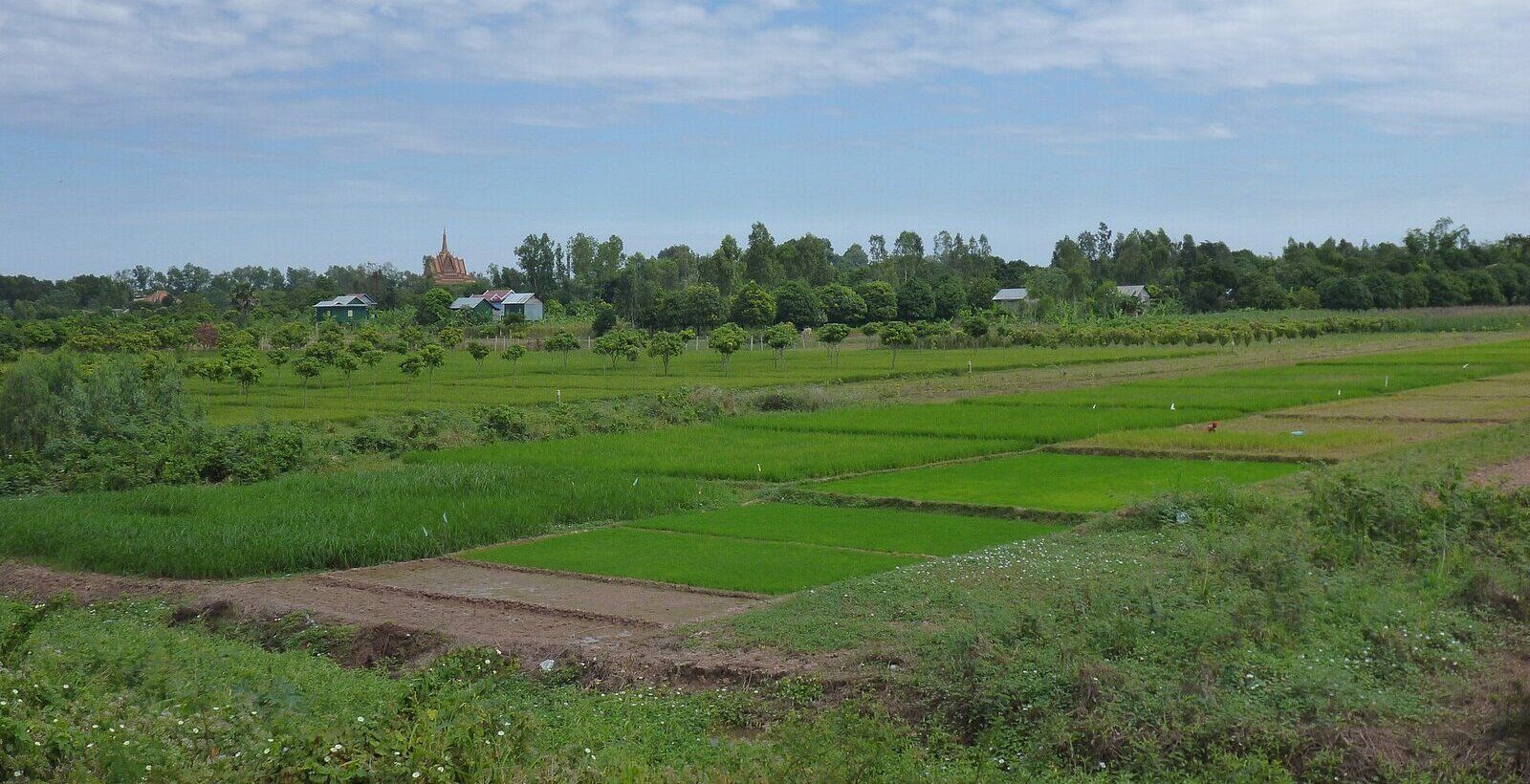
Photo: Adriaan Castermans, CC BY-SA 3.0, via Wikimedia Commons

At a glance
- Grandparents' deeds
- Ownership from before 1979 is not recognised. What counts is the possession and the titles since. More
- Which paper?
- A hard title from the land ministry. A soft title, usually a sale agreement certified by the commune or district, can be overruled by a hard title. More
- Check from abroad
- Anyone with an interest can ask the cadastral office; titles with the ministry's standard QR code can be checked on verify.gov.kh. More
- No title yet?
- The national survey reached 13.96 million plots by July 2026; titles are to be handed out by 2027. More
- Who inherits
- Children first, in equal shares; then parents or grandparents; then siblings. A spouse always inherits alongside them. More
- Three months
- An heir has three months from learning they are an heir to accept or renounce; silence counts as full acceptance, debts included. More
- Foreign passport only
- A non-Cambodian heir cannot inherit land. A child of a Cambodian parent is Cambodian too. More
- Tax
- No inheritance tax. Inheritances and first gifts between parents and children, spouses, and grandparents and grandchildren pay no stamp duty. More
- Signing from abroad
- Cambodia is not in the Apostille Convention: a power of attorney is legalised by a Cambodian embassy. More
- Disputes
- Titled land goes to the courts; untitled land to the Cadastral Commission; inheritance quarrels to the courts. More

The short answer
Family land in Cambodia belongs to whoever the land register says owns it today, or to whoever has lawfully possessed it under the 2001 Land Law, which recognises possession since 1989 that began before the law took effect. It does not belong to whoever owned it before 1979: the Land Law does not recognise any ownership from before that yearsource 1.
So the first question is what paper exists now, and in whose name. If a parent or grandparent holds a title, or possessed the land lawfully, it passes to their heirs under the Civil Code, without inheritance tax (see "Taxes" below). Heirs must be Cambodian citizens to inherit land itselfsource 2, and a child of a Cambodian parent is Cambodian by law: our citizenship guide explains how to prove it.
The steps below are the ones families abroad ask about: the papers, checking them, registering land that has no title, who inherits, and how to act from another country.
Why old family papers may not count
Under the Khmer Rouge, from 1975 to 1979, all housing and land became the property of the state and property records were destroyedsource 3. A 1992 land law formally extinguished pre-1979 rights (same source), and the 2001 Land Law keeps that line: "Any regime of ownership of immovable property prior to 1979 shall not be recognized"source 1.
What the law recognises instead is possession recognised since 1989 (same law, article 29). Someone who had held land peacefully and without challenge for at least five years before 2001 could ask for a definitive title, and the possession had to be unambiguous, open, continuous, non-violent and in good faith (articles 30 and 38). A family that left in the 1970s and has not held the land since has no claim on it from the old deed alone: the deed is a family keepsake and a starting point for questions, not proof of ownership today.
Families who stayed, or came back in the 1980s and 1990s and held their land from before the Land Law took effect in August 2001, are in a different position: their possession counts, and it can be inherited even where no title was issued (articles 72 and 73).
Hard titles and soft titles
- Hard title: an ownership certificate issued by the land ministry's cadastral administration and recorded in the land register; the State guarantees the ownershipsource 1. The title issued through systematic registration is "currently considered the best and safest form of hard title"source 4.
- Soft title: typically a sale agreement certified by commune (sangkat) or district (khan) authorities, not issued by national, provincial or municipal authorities; it "can be overruled by a conflicting hard title"source 4.
Separately, a title of possession, issued while the land register is being completed, is by law "evidence of possession but is not in itself a title of ownership"source 1.
Our property guide covers strata titles for condos, the only title a foreigner can hold.
Checking a title from abroad
The register is open to the people it concerns: a request for cadastral information "by any person who has an interest in it may not be refused", and information forms can be given to anyone who applies; the ownership certificate itself goes only to the owner or someone with legal rights over the landsource 1.
| Service | Official fee | Time |
|---|---|---|
| Online cadastral information | 20,000 riel, about $5 | |
| Certificate of cadastral information, per plot | 50,000 riel, about $12.50 | 5 working days |
| Duplicate (replacement) title, residential land | 400,000 riel, about $100 | 60 working days |
Fees from the land ministry's published schedulesource 5.
The land and telecoms ministries have put a standard QR code on ownership certificates so that they can be checked on the government's verify.gov.kh platformsource 6. The district and provincial cadastral offices keep the land register and provide information to anyone who askssource 1. From abroad, a relative or lawyer acting under a power of attorney can go for you (see below).
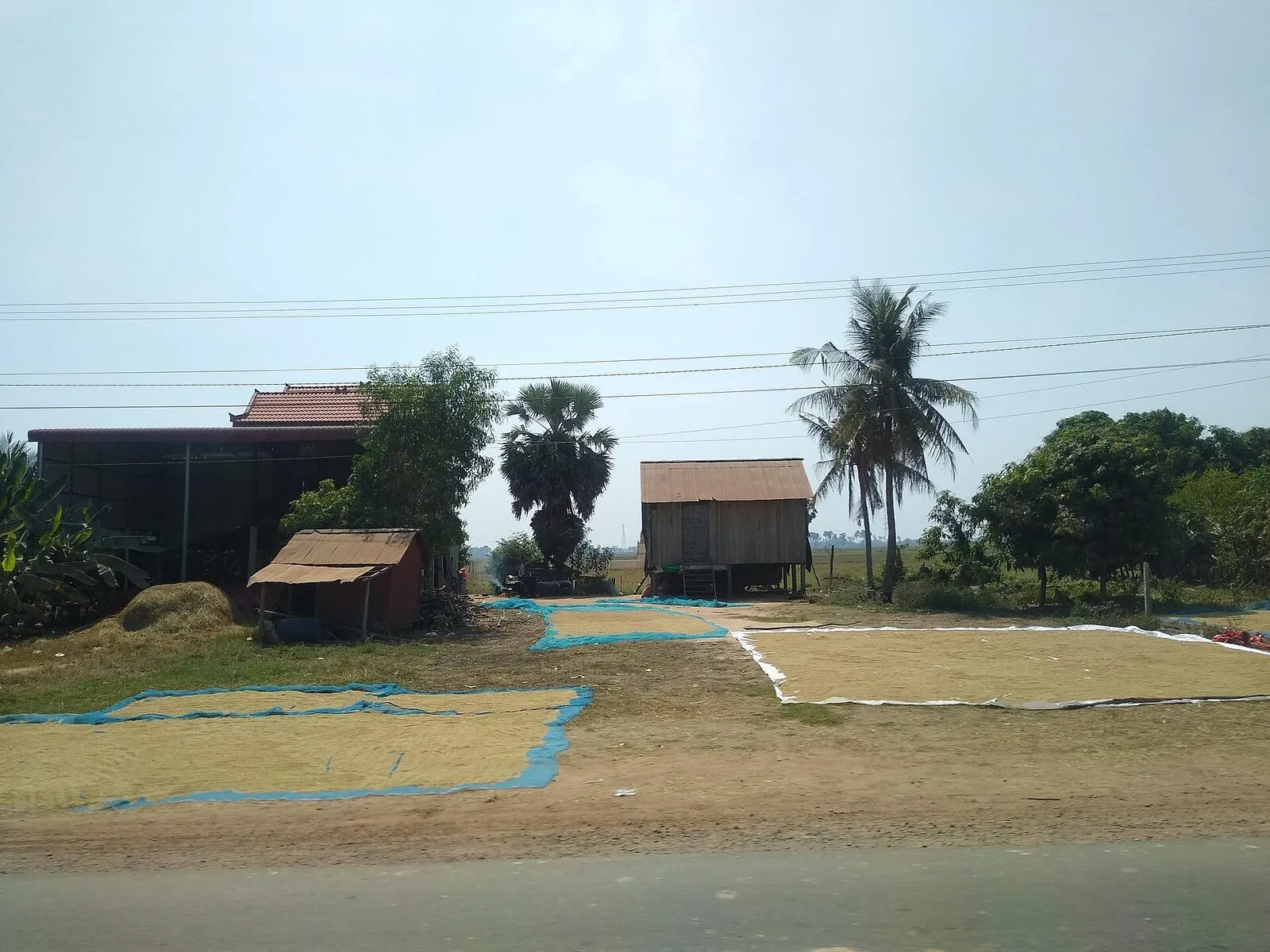 Homes in Chi Kraeng district, Siem Reap province. Most of the country's plots have now been surveyed in the nationwide campaign. Photo: Mx. Granger, CC0, via Wikimedia Commons.

Land with no title yet
The government is finishing a nationwide survey. By July 2026, 13,956,479 plots had been surveyed, 9,641,857 titles issued and 8,765,419 handed to owners; the Prime Minister set the end of 2026 for the survey and registration, and 2027 for handing out the titlessource 7. In October 2026 the ministry counted 3,556,744 surveyed plots still in process, some held up by disputes or wrong names on the recordsource 8.
There are two ways in:
- Systematic registration, when the survey reaches the village: the fee is charged per square metre, from 1 riel for farmland outside Phnom Penh to 500 riel for residential land in Phnom Penh, within 100 working days.
- Sporadic registration, a family's own application: 600,000 riel, about $150, for a residential plot in Phnom Penh or the towns of Kandal, Preah Sihanouk and Siem Reap, 400,000 in other provincial towns and 200,000 in the countryside, within 60 working days.
Both fees are from the ministry's schedulesource 5. If the family member who held the land has died, the heirs' claim builds on theirs: the time the deceased held the land counts towards the heirs' possessionsource 1.
Who inherits
Inheritance is in Book Eight of the 2007 Civil Code. Without a will, the order is fixedsource 9:
| Who survives | Who inherits |
|---|---|
| Children | The children, in equal shares, adopted children included; the children of a child who has died take that child's share. The spouse takes a share equal to each child's |
| No children, parents alive | The parents two-thirds, the spouse one-third; with one parent, half each |
| No children or parents | Grandparents (or, if there are none, brothers and sisters) half, the spouse half; a half-sibling takes half a full sibling's share |
Before the shares are worked out, property the couple owned together may first have to be divided, so that only the deceased's part is inheritedsource 10. Until the heirs divide it, they own the inheritance togethersource 2, and a family home, or land that supports the family, cannot be divided or sold without every co-heir's express consentsource 1.
Three months to decide. Within three months of learning that a succession has opened in their favour, an heir must accept it or renounce it; a court can extend the periodsource 11. An heir who does nothing is treated as having accepted outright, debts included (articles 1254 and 1255), and renouncing takes a motion to the court (article 1260). For heirs abroad, this matters when the deceased left debts.
Wills
The Civil Code allows three ordinary forms of willsource 12:
- Notarial: declared to a notary in front of at least two witnesses;
- Private: written entirely by hand by the person making it, dated and signed; a typed one is void;
- Secret: signed, sealed and declared before a notary and at least two witnesses.
A notarial will needs no probate from a court; a private or secret will must go before the courtsource 13. A will cannot cut out close family completely: children, parents or grandparents and the spouse together have a legally secured portion of one-half of the estate (one-third when the only heirs are parents or grandparents), shared in proportion to their inheritance sharessource 14.
Heirs who are not Cambodian citizens
A successor who does not hold Cambodian nationality cannot inherit land, by law or by willsource 2. The rest of the inheritance is divided with that in mind. If none of the nearest heirs is Cambodian, they may together sell the land within three months of accepting the succession and share the proceeds; if they don't, the land passes to the next heirs in line who are Cambodian (same article).
For many families abroad the answer is citizenship rather than a sale: a child of a Cambodian parent is Cambodian wherever they were born, and our citizenship guide sets out the law and the papers that prove it. A foreigner can still own a condo above the ground floor: see the property guide.
Registering an inheritance
For land with a hard title, the heirs register the transfer at the cadastral office. The documents usually include the death certificate, proof of the family relationship, the heirs' identity documents and the title itselfsource 10. For tax purposes, a succession is established by a written will or an authentic act where there is no dispute, or by a court decision where there is onesource 15. A private agreement among relatives is not enough: a succession made as a private document cannot be registeredsource 1.
The ministry's fee for registering a transfer of a residential plot is 600,000 riel in Phnom Penh and the towns of Kandal, Preah Sihanouk and Siem Reap, 400,000 in other provincial towns and 200,000 in the countryside, within 15 working dayssource 5. A death certificate or other paper from abroad has to be legalised first, as below.
Acting from abroad: power of attorney
Cambodia is not a party to the Hague Apostille Conventionsource 16, so an apostille alone is not enough. From the United States, for example, a power of attorney or a death certificate is authenticated by the state that issued it, then by the US Department of State's Office of Authenticationssource 17, then legalised by the Royal Embassy of Cambodia in Washington; a power of attorney is notarised first, according to the third-party guide ApostilleChecksource 18. We found no fee published by the embassy. Cambodian offices work in Khmer, so ask the office that will receive the document whether it needs a certified translation.
Make the power specific: name the plot by its title number, and the acts the person may carry out on your behalf.
Taxes
There is no inheritance or estate tax in Cambodia, but inherited land pays the 4% stamp duty unless an exemption appliessource 19. Land passed between biological parents and children, between spouses, or between biological grandparents and grandchildren pays no stamp duty when it is inherited or given for the first time; from a second gift on, only the first 100 million riel is exemptsource 20. Between parents-in-law and children-in-law, between grandparents-in-law and grandchildren-in-law, and between siblings, an inheritance gets an allowance of 200 million riel, about $50,000, off the taxable value, and a gift 100 millionsource 15.
Once the land is yours, the yearly property tax is 0.1% of its value above 100 million riel, and land categorised as agricultural land is exemptsource 21. Selling it later is covered in the property guide, including capital gains tax from 1 January 2027source 19.
When the family disagrees
Where a dispute goes depends on the land. Disputes over titled land go to the courts; disputes over land without a title go to the Cadastral Commission; and disputes over a succession, a sale or a lease go to the courts even when the land has no titlesource 22. The Cadastral Commission rules on disputes over untitled land, and a party dissatisfied with its decision can go to courtsource 1.
Registration is what protects heirs who live abroad: a succession made in authentic form but not registered with the cadastral administration "remains ineffective against third parties"source 1.
What our guests say
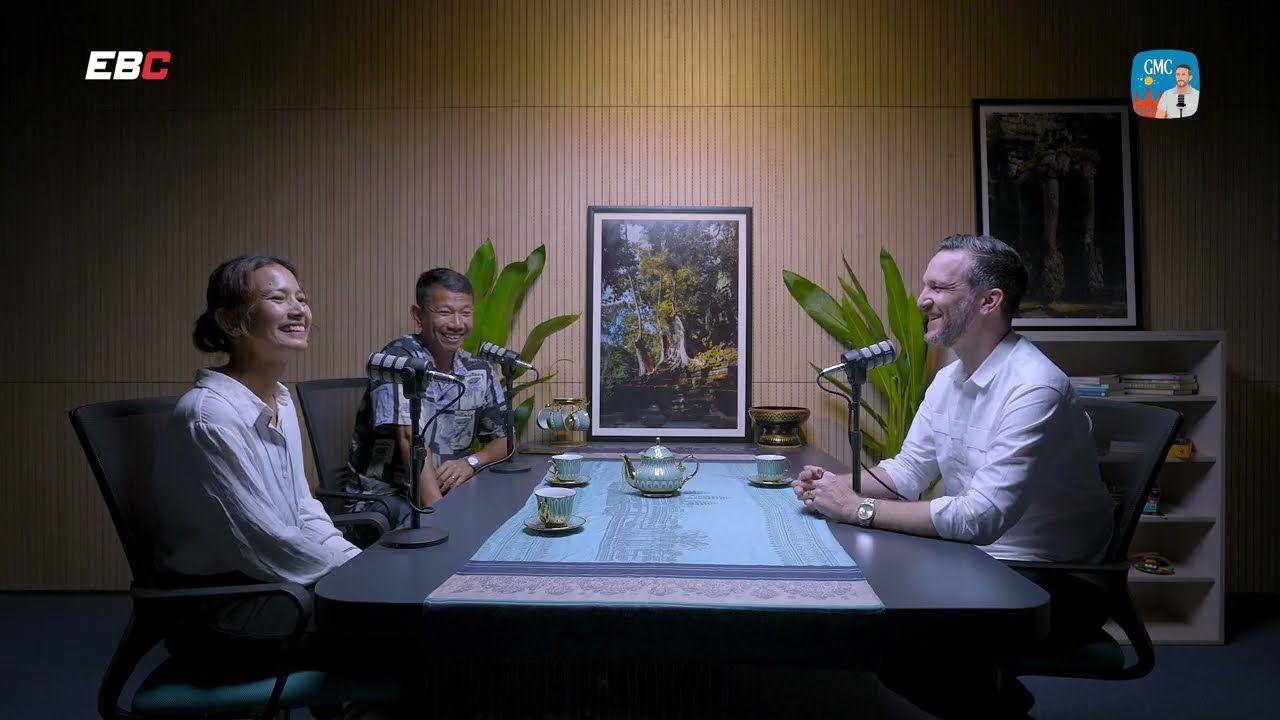
Daniel Eang, a Cambodian-born photographer, keeps going back to one rice field, where his grandfather grew up and now rests:
Like I have a rice field photo where I call it the grandfather's land.
 Daniel Eang photographs the Cambodian countryside. His story is in the episode.
Bunika San spent more than 30 years in the United States (10:57) and, rather than sit idle in retirement, came back to Cambodia, "my hometown" as he puts it (22:16); he was born in Kampot town (2:18). He now has a durian farm of nearly 1,000 trees (3:58). More returnees' stories are in Returning to Cambodia.
Questions
Can I claim my family's land from before 1979?
Not on the strength of old ownership: the Land Law does not recognise ownership from before 1979. What counts is possession since then and the titles issued since.
How do I check a land title in Cambodia?
Ask the district or provincial cadastral office, which may not refuse cadastral information to anyone with an interest; the ministry also offers an online cadastral information service for 20,000 riel. Newer titles carry a QR code that can be checked on verify.gov.kh.
Is a land title free in Cambodia?
Not quite. Systematic registration charges by the square metre, from 1 riel for farmland outside Phnom Penh to 500 riel for residential land in Phnom Penh. A family's own application costs 200,000 to 600,000 riel a plot.
Who inherits land in Cambodia without a will?
The children in equal shares, with the spouse taking a share equal to each child's. Without children, the parents and the spouse; without parents, grandparents (or, failing them, siblings) and the spouse.
Can I inherit land if I only have a foreign passport?
Not the land itself. A child of a Cambodian parent is Cambodian, though, and can prove it; if none of the nearest heirs is Cambodian, they may sell the land within three months of accepting and share the proceeds.
Is there inheritance tax in Cambodia?
No. Inheritances and first gifts between parents and children, spouses, and grandparents and grandchildren pay no stamp duty; other inheritances pay 4%, with an allowance for in-laws and siblings.
Can I sign a power of attorney abroad?
Yes. Because Cambodia is not in the Apostille Convention, it is authenticated in the country where you sign it, then legalised by a Cambodian embassy.
Ask us
Trying to work out what happened to your family's land, or planning to come home? Tell us where you are and what you're looking into, and we reply by email.
The conversations in this guide
 56:57 S1 · Episode 17
Daniel Eang: is Cambodia Southeast Asia's most overlooked opportunity?
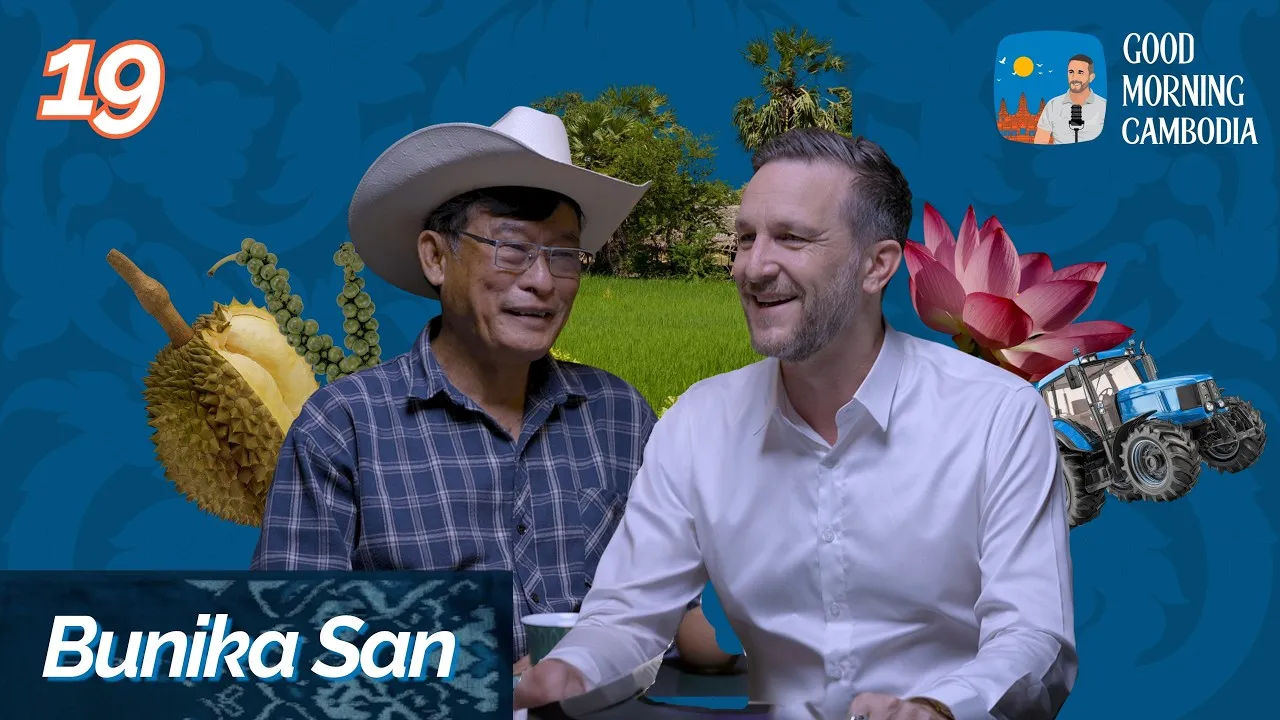 1:05:26 S1 · Episode 19
Bunika San: from Southern California to Cambodian agriculture
 1:24:15 S1 · Episode 18
Keo Sar: from a refugee camp to an $8 billion IPO
 1:04:50 S1 · Episode 13
Victor La on getting Cambodian businesses ready for investors
 55:31 S1 · Episode 11
Sokoun Chanpreda: Cambodia is not the country most people think
More guides
-
-
-
-

-
-
-

-
-
Sources (22)
- 1Land Law, articles 240 to 243
- 2Civil Code, article 1155
- 3Rhodri C. Williams, 'Title through possession or position?', in Land and Post-Conflict Peacebuilding, 2013
- 4Tilleke & Gibbins, November 2023
- 5Ministry of Land Management, cadastral services
- 6Cambodianess, 3 December 2023; Cambodianess, 29 August 2026
- 7AKP, 29 July 2026
- 8AMS, 21 October 2026
- 9Civil Code, articles 1156 to 1162
- 10Lorn & Partners, 14 July 2026
- 11Civil Code, article 1248
- 12Civil Code, articles 1173 to 1175
- 13HBS Law
- 14Civil Code, article 1230
- 15Deloitte, September 2024
- 16HCCH, status table
- 17US Department of State
- 18ApostilleCheck, July 2026
- 19Deloitte, 2026
- 20Royal Government decision of 10 January 2016, published by the General Department of Taxation; Deloitte, September 2024
- 21DFDL, October 2024
- 22Joint Prakas of the justice and land ministries, 26 November 2003