
Can foreigners buy property in Cambodia? What the law allows, and what it costs
A foreigner can own a condo in Cambodia, but not the land under it, and not a house on its own plot. Everything else is a workaround, and some are safer than others. Here is what the law says, checked at its source, what buying costs in tax and in asking prices, and what our guests learned.
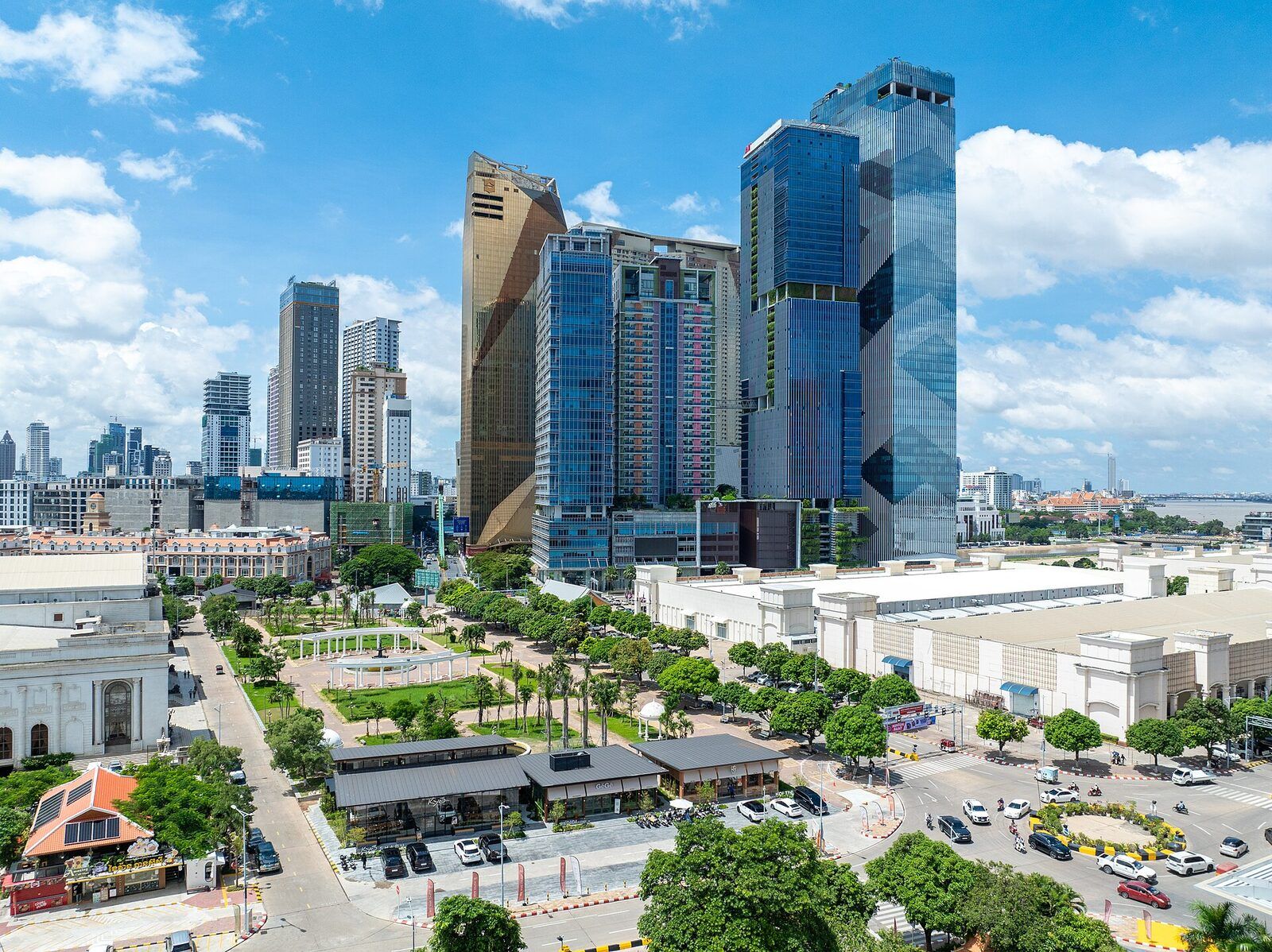
Photo: KomboHypexViva, CC BY-SA 4.0, via Wikimedia Commons

At a glance
- Can I buy a condo?
- Yes, a unit above the ground floor in a building registered as co-owned, as long as foreigners own no more than 70% of its private floor area. More
- A house or land?
- Not in your own name. Only Cambodian citizens and companies at least 51% Cambodian can own land. More
- The lease route
- 15 to 50 years, renewable, each renewal for up to 50 years. Registered on the title, it can be sold and inherited. More
- Trusts
- Legal since 2019: a licensed trustee holds the title for you. 1,029 real-estate trusts were registered by mid-2026. More
- Nominees
- Tilleke & Gibbins calls them prohibited; BNG Legal says they contradict the Constitution and the Land Law. More
- Which title?
- A hard or strata title from the land ministry. A soft title from the commune can be overruled. More
- Taxes to buy
- 4% stamp duty, paid by the buyer, with reliefs for home buyers until the end of 2026. More
- Selling
- 20% capital gains tax on property is scheduled from 1 January 2027. More
- Off-plan
- Large projects need a licence and a 2% deposit or bank guarantee, which European businesses called too thin. Well over a hundred housing projects have ended up in disputes. More
- Condo prices
- Median asking price in Phnom Penh: $104,000 across 1,605 ads, $75,000 for a studio or one bedroom (November 2026). More
- Mortgage
- Some banks lend to foreigners on condos, some only to Cambodians. More

The short answer
Cambodia's Constitution gives the right to own land only to Khmer citizens and Khmer legal entitiessource 1. A 2010 law opened one door: a foreigner can own a private unit in a co-owned building, from the first floor upsource 2. That is a condo, never the plot under it. Proposals to let foreigners own land have been rejected, the Prime Minister said in November 2023source 3, and the rules were the same when we checked in November 2026source 4.
| What you want | Can a foreigner own it? | How people do it |
|---|---|---|
| A condo above the ground floor | Yes, with a strata title | Buy it in your own name |
| A ground-floor or basement unit | No | A long lease |
| A house, a villa, a borey home | No: it comes with land | A long lease, a trust, a company, a nominee |
| Land, farmland | No | The same four routes |
| Any of it, as a Cambodian citizen | Yes | Citizenship by descent or naturalisation |
A company is Cambodian, and can own land, when Cambodians hold at least 51% of its shares as written in its articlessource 5.
Buying a condo
From the first floor up. The ground floor and anything below it cannot be owned by foreigners, and neither can the land the building stands onsource 2. "First floor" here is the storey above the ground floor, which the law excludes by namesource 2: what Americans call the second floor.
70% of the floor area, not 70% of the units. Foreigners together may own up to 70% "of the total surface size of all private units" of a buildingsource 6. Some guides count units insteadsource 7. Ask the developer or the building how much of the foreign quota is left before you pay a deposit.
Not within 30 km of a land border, nor in other areas the government designates, except in special economic zones, important urban areas and other areas the government namessource 4. We found no official list of those urban areas. A sale that breaks these rules is void, and the parties must reverse itsource 2.
The building must be registered as co-owned. Some agencies say only buildings finished after 2010 qualifysource 8. The law sets no such date, and an existing building can be converted, but most units in Cambodia are not registered as co-owned property at allsource 9. In 2014 DFDL knew of no single-owner building that had been converted for sale to foreignerssource 10. Without that registration there is no strata title for you to receive.
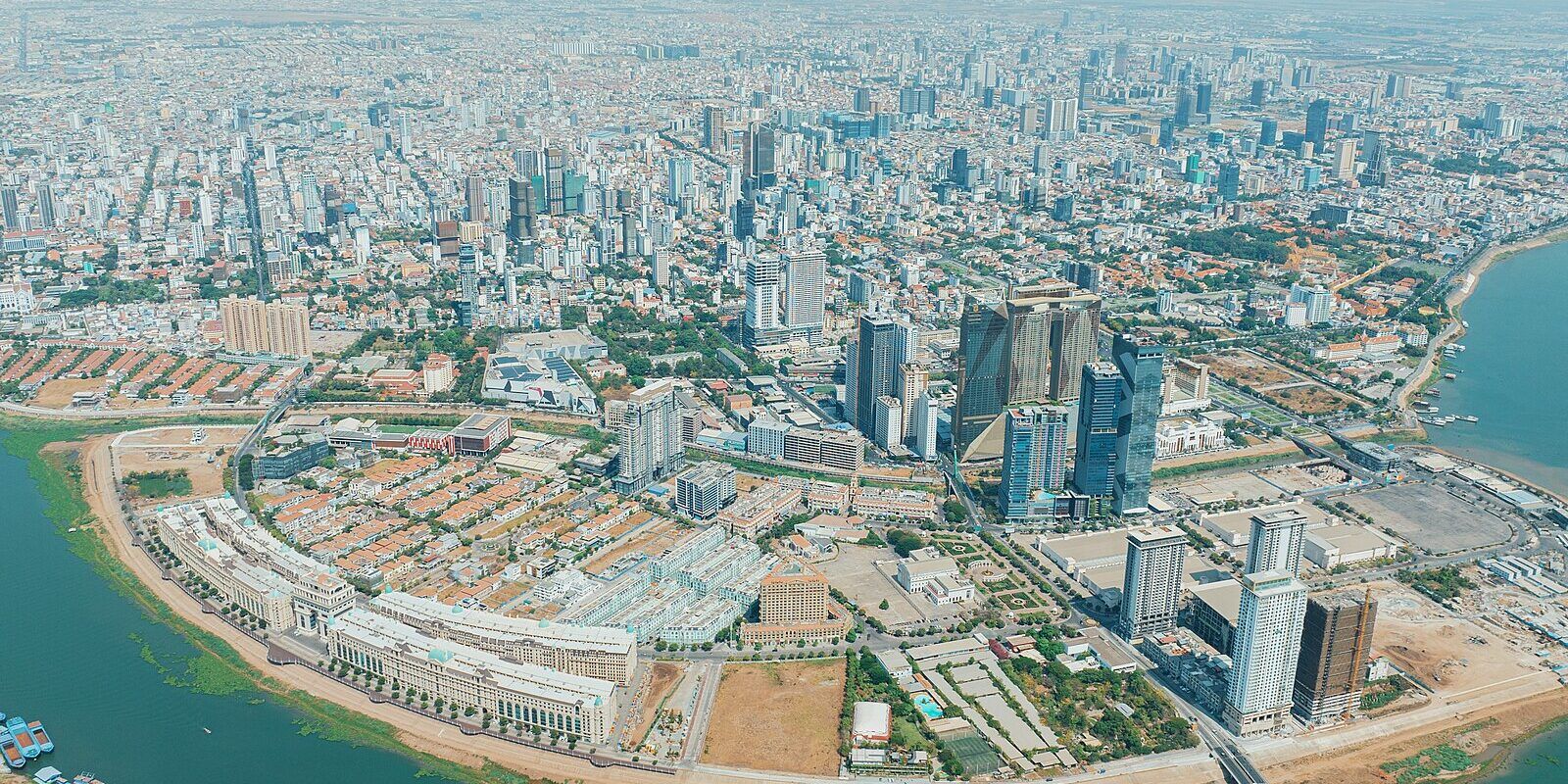
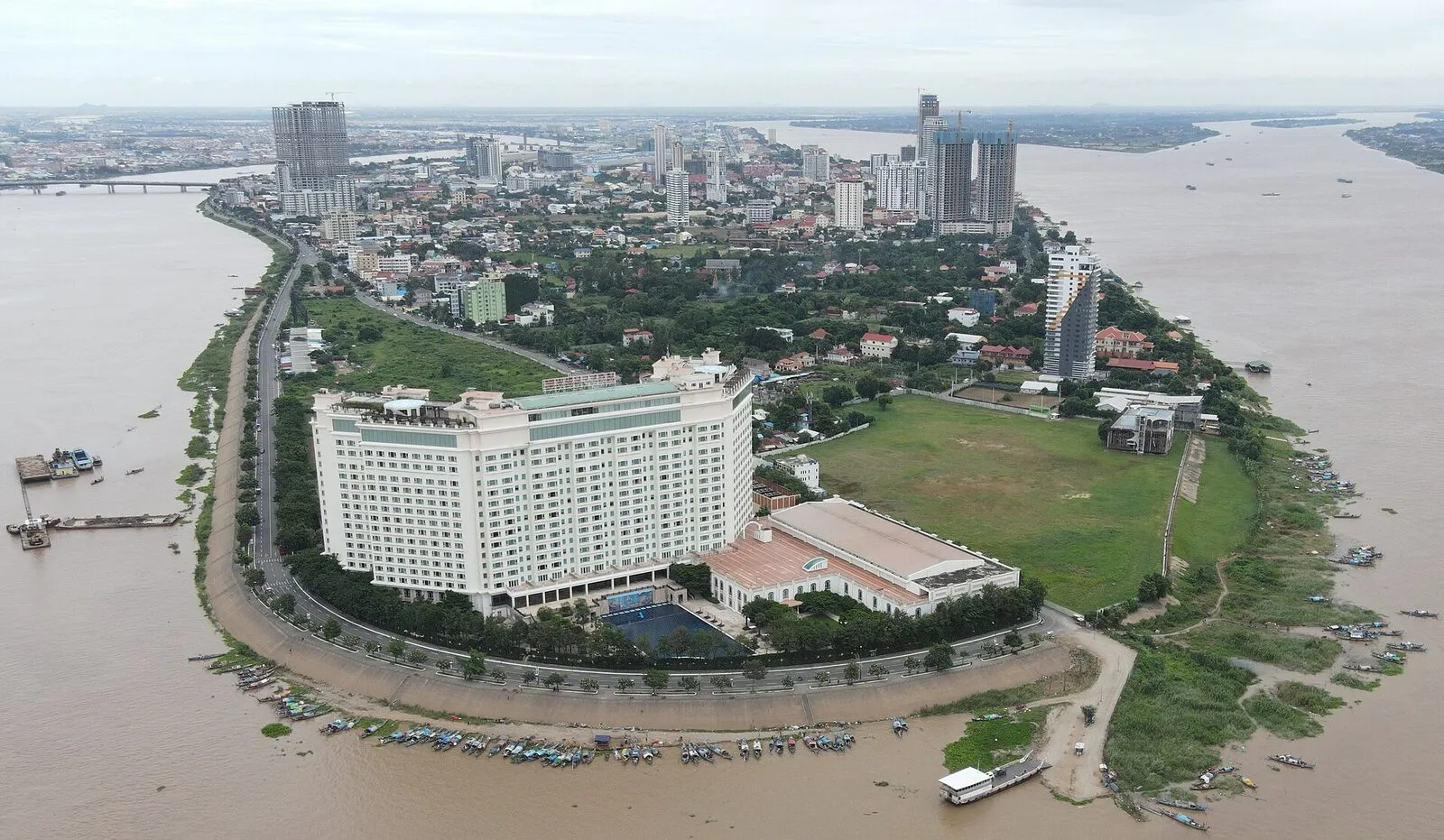 Chroy Changvar, across the river from central Phnom Penh: condo towers of the kind a foreigner can buy into, among houses and land a foreigner cannot. Photo: Kiensvay, CC BY-SA 3.0, via Wikimedia Commons.

Titles: hard, soft and strata
- Hard title: issued by the Ministry of Land Management or its provincial or municipal departments. The certificate from systematic registration (the LMAP title) is considered the safest formsource 11.
- Soft title: a sale agreement certified by the commune or district. It is not issued by national, provincial or municipal authorities "and can be overruled by a conflicting hard title" (same source).
- Strata title: the ownership certificate for one unit in a co-owned building, issued when the building's master title is divided into unit titles. It is the one a foreign condo buyer receivessource 10.
Hard titles, long leases and mortgages are all registered at the cadastral office of the province or city, which is where a lawyer checks who owns the property and what is charged against it. Inheriting family land is in our family land guidesource 12.
Houses and land: the four routes
Each route is legal in a different degree. "There is no entirely risk-free way for foreigners to own land in Cambodia without obtaining Cambodian citizenship or investing in co-owned buildings," the law firm DFDL writessource 9.
1. A long lease. The Civil Code allows a lease of 15 to 50 years; a longer term is cut to 50, and it can be renewed, each renewal for up to 50 yearssource 13. Registered, it binds anyone who later buys the land, and it can be sold, inherited and sublet (same source), and used as security for a loansource 9. Leases made under the 2001 Land Law before the Civil Code took effect keep their agreed term, capped at 99 years from the date the Civil Code took effectsource 14. In 2023 the Prime Minister restated that foreigners cannot own land but can lease it for 15 to 50 yearssource 3.
2. A trust. Cambodia enacted a Trust Law in 2019source 11. Under it, a licensed trust company can hold property on your behalf; the trust must be registered with the Trust Regulator to be validsource 15. By the second quarter of 2026 there were 1,997 trusts worth about $2.7 billion, 1,029 of them for real estate; the regulator had licensed or recognised 18 trustee companies, 74 individual trustees and 30 banks offering escrow trustssource 16. The trustee, not you, holds the title. We found no published fee schedule. Businesses say the tax treatment needs "further clarification"source 15, and "few trust companies have a solid track record"source 11.
3. A company that is 51% Cambodian. It can own land in its own namesource 5. Side agreements cannot undo the 51% rule: any private agreement by a shareholder contrary to it "is null and void" (same article). The business guide covers setting up a company.
4. A nominee: a Cambodian who holds the title for you. "Nominee structures that subvert restrictions on ownership of land by foreign nationals are prohibited", though the law does not define them clearlysource 11. Another firm, BNG Legal, does not endorse them and says the arrangement contradicts the Constitution and the Land Law. It also notes that nominees used through land-holding companies have been widespread and, so far as it knows, unchallenged, though the practice is becoming less commonsource 17. The title is in the nominee's name, not yours, which BNG calls a high degree of risk.
Off-plan: buying before it is built
A project of more than 30 houses or units needs a licence from the Real Estate Business and Pawnshop Regulator. The developer must hold capital equal to the full construction cost, or at least 20% of it under the second type of licence, plus a deposit of 2% of that cost or a bank guaranteesource 18. Under the earlier rules, with the same 2% deposit and 20% capital, members of the European chamber of commerce called them "insufficient to act as an adequate safety net" for buyerssource 19.
Projects do stall. In November 2024 the Prime Minister said 53 of 99 disputed real estate projects had been resolvedsource 20. In May 2025 the land ministry counted at least 139 large housing projects caught in legal disputes, about 100 of them resolvedsource 21. In Preah Sihanouk province, 362 buildings stood unfinished in January 2024source 22, and in September 2026 the developer Leng Navatra said the land ministry had ordered his group's assets frozen over Borey Leng Navatra 6A, where a ministry official had put the unfinished houses at about 1,500source 23. Buying in a finished building with its strata titles issued avoids the risk of a project that is never finished.
What buying costs
| Tax or fee | Amount | Who pays, when |
|---|---|---|
| Stamp duty (transfer tax) | 4% of the government's reference value or, failing that, the contract price | The buyer, within 3 months of the cadastral office's transmission ordersource 24 |
| Stamp duty relief | A first-time home buyer: exempt up to $210,000, or $210,000 deducted above it. A second or later home: $70,000 deducted | Until 31 December 2026source 25 |
| Cadastral fee to register the transfer | A condo unit: KHR 1,200,000, about $300. Residential land: KHR 600,000, about $150, in Phnom Penh and the towns of Kandal, Preah Sihanouk and Siem Reap | 15 working dayssource 26 |
| Property tax | 0.1% a year of the value above KHR 100 million, about $25,000 | Due 30 Septembersource 27 |
| Capital gains tax on a sale | 20%, from 1 January 2027 | The sellersource 28 |
| Tax on rent you receive | 10% withheld if you are resident, 14% if not | A business tenant withholds it; with a private tenant, you declare and pay the 10% yourselfsource 29 |
The relief summaries speak of "individuals" without saying whether a foreign buyer qualifies: ask the developer's lawyer before counting on one. For capital gains, the deduction is 80% of the sale price or your documented costsource 30, and the July 2025 rules exempted a primary residence held for at least five years, one per taxpayer and spousesource 31. New rules replaced them in December 2025source 32; we could not confirm that they keep that exemption. The tax on property sales has been postponed before; whether 2027 holds, and whether the reliefs run past 2026, was not announced when we checked.
What a condo costs
Asking prices, not sale prices: we counted every condo ad for Phnom Penh on realestate.com.kh, the largest agency portal, on 12 November 2026. 1,605 single-unit ads with a price; the median is $104,000, about $1,760 a square metresource 33. Many ads are old: the 497 posted in 2026 have a median of $85,000. The table gives median asking prices by area.
| Area (ads) | Studio, 1 bed | 2 beds | Per m² |
|---|---|---|---|
| Phnom Penh (1,605) | $75,000 | $135,000 | $1,758 |
| BKK1 (163) | $120,000 | $237,500 | $2,555 |
| Tonle Bassac (188) | $110,000 | $220,000 | $2,193 |
| Daun Penh (58) | $85,000 | $250,000 | $2,306 |
| Chroy Changvar (193) | $74,000 | $160,000 | $1,759 |
| Toul Kork (164) | $60,000 | $86,000 | $1,555 |
| Sen Sok (145) | $66,500 | $95,000 | $1,580 |
| Meanchey (258) | $60,000 | $95,850 | $1,375 |
Tonle Bassac includes Koh Pich. Ads posted in 2026 ask less in every area. Their median, against all ads: BKK1 $135,000 (38 ads) against $178,200; Tonle Bassac $185,000 (44) against $205,000; Chroy Changvar $100,000 (59) against $109,000; Toul Kork $66,500 (48) against $73,000; Sen Sok $65,500 (66) against $82,000; Meanchey $68,500 (107) against $79,928.
Outside the capital the market is thin: 18 priced condo ads in Siem Reap, median $126,700source 34, and 39 in Sihanoukville, median $75,162source 35. "Condo" is the advertiser's label: it does not prove a strata title or foreign quota left.
The market has been falling. The average condo price in Phnom Penh more than doubled from 2012 to 2019, to $3,184 a square metre, then fell in 2020, 2021, 2022 and 2024source 36. In the third quarter of 2026, high-end asking prices averaged $2,599 a square metre, down 6.7% on the quarter, mid-range $2,045 and affordable $1,110source 37. Knight Frank put Phnom Penh's existing condo supply at 63,334 units at the end of 2025, and the average sales rate in the projects it follows at about 3% to 4%, "the lowest in recent decades"source 38. For a buyer that means room to negotiate; for a seller, a slow exit.
Rents. Asking rents give a gross yield of about 6.6% on Phnom Penh flats on average, 6.95% on a one-bedroom ($550 a month on $95,000), before costs that typically take 1.5 to 2 points offsource 39.
Other costs. The seller or developer usually pays the agent, 3% to 5% of the price, and a building charges about $1 to $2 a square metre a month for management, according to the portal itselfsource 40. We found no law firm that publishes its fee for a condo purchase.
Buying step by step
- Check the title at the cadastral office (or have a lawyer do it): the owner, the type of title, any mortgage or lease on itsource 12. Title certificates carry a QR code for an online checksource 41.
- For a condo, check the building: registered as co-owned, its strata titles issued or due, the foreign quota left, the 30 km rule. Off-plan, check the developer's licence.
- A written sale and purchase agreement, with the payment schedule tied to the title transfer.
- Pay the stamp duty, within 3 months of the cadastral office's transmission ordersource 24. From 2027 a seller must also pay capital gains tax, together with the stamp duty, before the transfer can be processedsource 32.
- Register the transfer at the cadastral office, which issues the title in your name.
Mortgages and moving money
Lending to foreigners is a matter of each bank's policy. ABA's mortgage requires a Cambodian citizensource 42. Phillip Bank lends to "Cambodian citizens and foreigners, both residents and non-residents"source 43. RHB lends to residents and non-residents; for non-residents, only on property from the first floor up, not the ground floorsource 44.
Money moves freely through licensed banks: the Law on Foreign Exchange sets no restrictions on foreign exchange operationssource 45, and the US State Department reports no restrictions on converting investors' capitalsource 46.
Married to a Cambodian
Property bought during a marriage is generally owned in common by both spousessource 47, but land is usually titled in the Cambodian spouse's name, and on divorce a court approves or makes the divisionsource 48. If the Cambodian spouse dies, an heir without Cambodian nationality cannot inherit land. If every first-rank heir is foreign, they may sell it within three months of accepting the succession and inherit the proceeds; otherwise it passes to the next Cambodian heirssource 49.
When the owner dies
A foreigner's condo passes to the heirs like any other property: the 2010 law lets a unit be transferred by succession, with the heir taking over its rights and dutiessource 2. A notarial or authenticated will in Cambodia needs no probate from a court; a private or secret will doessource 50.
Cambodian by descent or by naturalisation
Cambodian citizens can own landsource 11. If one of your parents is Cambodian, you may be Cambodian already: our citizenship guide explains how to prove it. Naturalisation by investment or donation now takes KHR 4 billion (about $1 million) invested or KHR 12 billion (about $3 million) donated, up from about $300,000 and $245,000 before December 2025source 51.
What our guests say
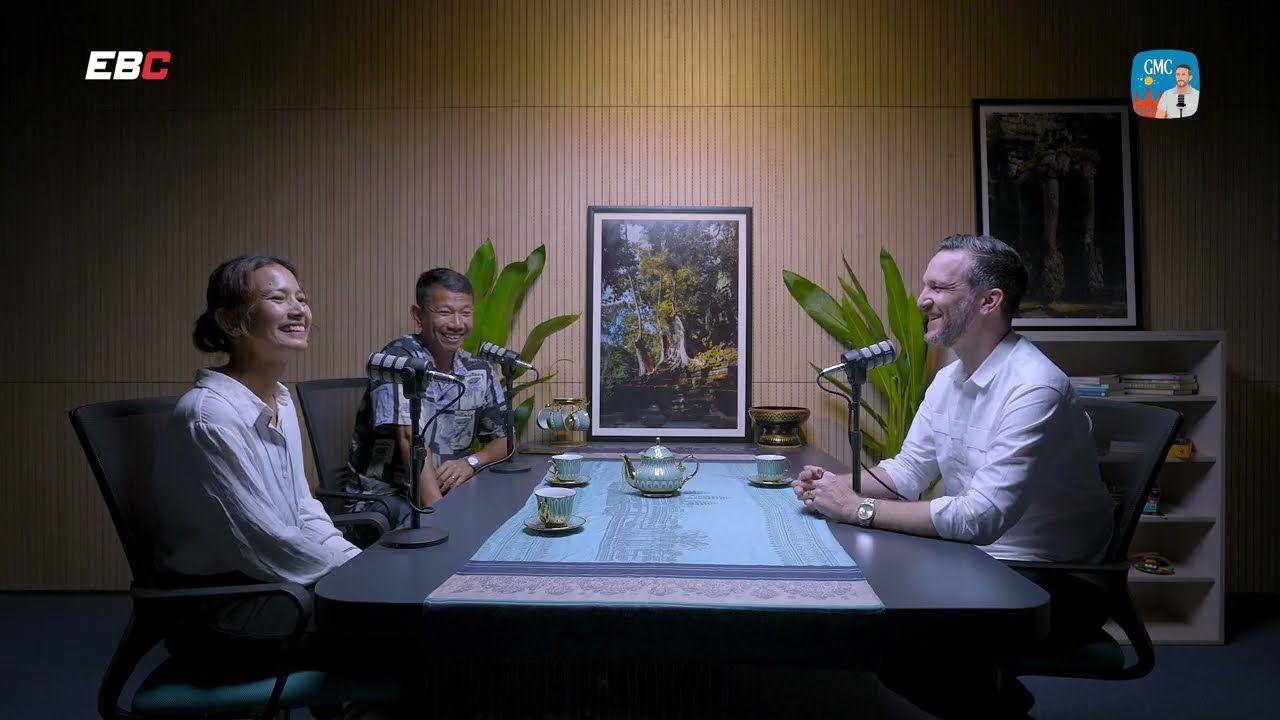
Alan Neo, who heads PropNex Cambodia, tells smaller buyers to start with a condo in the city, at about $100,000 to $200,000, and expects a good return (32:10):
Rental yield is about 8% per year which very high compared to my country.
That is his figure, as an agent. The published average for Phnom Penh flats is about 6.6% gross, before costs (see "What a condo costs"). He also raises the trust route for land, and warns that the regulation of estate agents here is not yet strong (28:11). His advice is to choose your partners with care (39:22).
 Alan Neo first came to Cambodia from Singapore in 2017 and moved soon after. He heads PropNex Cambodia. His story is in the episode.
Chad Lehner, who farms in Kampong Chhnang and bought more farm plots over the years (15:28), sees property as a long-term bet, but one that is now in its first real downturn:
The boom bust cycles out here. This is probably the first really meaty one we've had out here.
Frankie Baroudi made his first investment here in property: a mango farm (25:23). And Alexis de Suremain opened Pavilion, his boutique hotel in Phnom Penh, without owning the building: the heritage villa's landlord paid for the work (16:05).
Questions
Can Americans buy property in Cambodia?
Yes, on the same terms as any foreigner: a condo unit from the first floor up, in a building registered as co-owned, within the 70% foreign share. Not land, and not a house with its land. See "Buying a condo" above.
Can a foreigner buy a house in Cambodia?
Not in their own name, because a house comes with its land. The options are a registered lease of up to 50 years, renewable, a trust, a 51% Cambodian company, or a nominee, each with its risks: see "Houses and land: the four routes".
Can a foreigner buy land in Cambodia?
No. Only Cambodian citizens and companies at least 51% Cambodian can own land. A Cambodian by descent or a naturalised citizen is a Cambodian citizen, and can.
How long can a foreigner lease land?
From 15 to 50 years, renewable for up to 50 more. Register the lease on the title so that it binds a later owner.
Is using a nominee legal?
Tilleke & Gibbins calls nominee structures prohibited, and BNG Legal says they contradict the Constitution and the Land Law, though nominees used through land-holding companies have been widespread and, as far as BNG knows, unchallenged. The title is in the nominee's name, so the risk is yours.
Can a foreigner get a mortgage in Cambodia?
From some banks: Phillip Bank lends to foreigners on residential property, and RHB to non-residents on units from the first floor up; ABA's mortgage is for Cambodian citizens.
Do I pay capital gains tax when I sell?
20% on property sales is scheduled from 1 January 2027, with a deduction of 80% of the price or your actual cost.
What is the average price of a house in Cambodia?
There is no official average. In Phnom Penh, a borey link house (a terraced house, typically four bedrooms) had a median asking price of $138,000 across 339 ads, and a twin villa $305,000 across 415source 52. A foreigner cannot own either outright: see "Houses and land: the four routes".
Ask us
Thinking of buying, or of renting first? Tell us what you're looking for and where, and we reply by email.
The conversations in this guide
 44:03 S1 · Episode 7
Alan Neo of PropNex on why Cambodia is underestimated
 1:00:51 S1 · Episode 1
Chad Lehner on agri-business and everyday life in Cambodia
 39:04 S1 · Episode 16
Frankie Baroudi: Cuban cigars, rare spirits and making Cambodia home
 1:01:12 S1 · Episode 4
Alexis de Suremain: the three-month assignment that lasted two decades
More guides
-
-
-
-
-
-
-

-
-
Sources (52)
- 1Constitution, article 44
- 22010 foreign ownership law, article 6
- 3AKP, 15 November 2023
- 4MLV Law Group, 1 November 2026
- 5Land Law, 2001, article 9
- 6Sub-Decree 82, 2010, article 2
- 7Emerhub, December 2024
- 8IPS Cambodia, October 2026
- 9DFDL, 2025
- 10DFDL, February 2014
- 11Tilleke & Gibbins, November 2023
- 12Cambodia Counsel, February 2020, archived
- 13Civil Code, articles 244 to 252
- 14Law on the Implementation of the Civil Code, article 41
- 15Phnom Penh Post, 3 July 2026
- 16AKP, 4 August 2026
- 17BNG Legal, July 2024
- 18DFDL, April 2024
- 19EuroCham, 2023
- 20Phnom Penh Post, 27 November 2024
- 21Phnom Penh Post, 12 May 2025
- 22Cambodianess, 31 January 2024
- 23CamboJA News, 9 September 2026
- 24General Department of Taxation
- 25Rajah & Tann, January 2026
- 26Ministry of Land Management
- 27DFDL, October 2024
- 28KPMG, January 2026; PwC, January 2026; AKP, 5 January 2026
- 29Deloitte, 2026; DFDL, 2025
- 30Deloitte, 2026
- 31KPMG, August 2025
- 32KPMG, January 2026
- 33realestate.com.kh, Phnom Penh condos, counted 12 November 2026
- 34realestate.com.kh, Siem Reap condos, counted 12 November 2026
- 35realestate.com.kh, Sihanoukville condos, counted 12 November 2026
- 36Global Property Guide, March 2026
- 37Cambodia Investment Review on APS, 13 October 2026
- 38Knight Frank, February 2026
- 39Global Property Guide, July 2026
- 40realestate.com.kh, July 2025
- 41Construction & Property, February 2020
- 42ABA
- 43Phillip Bank
- 44RHB
- 45Law on Foreign Exchange, 1997, article 5
- 46US State Department, 2025
- 47VLP Law Office, September 2026
- 48Khmer Legal, December 2024
- 49Civil Code, article 1155
- 50HBS Law
- 51Phnom Penh Post, 21 January 2026
- 52realestate.com.kh, link houses, counted 12 November 2026; realestate.com.kh, twin villas, counted 12 November 2026