

Ted Ngoy: from refugee to California's Donut King
With Ted Ngoy
About this episode
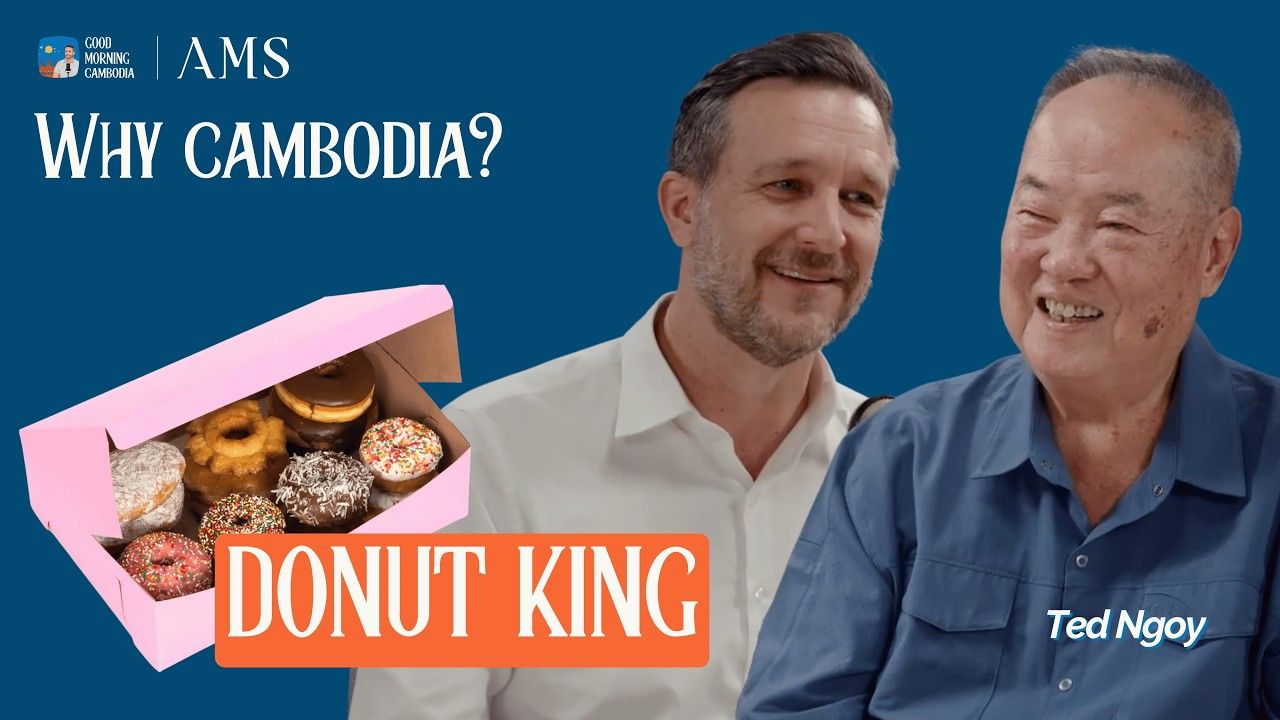
Jesse McCaul talks with Ted Ngoy, known as the Donut King, who arrived in California as a refugee in 1975 at about 33, speaking little English. He describes working three jobs at once, becoming the first Asian manager trainee at Winchell's, buying his first shop, Christy's Donuts, and sponsoring Cambodian refugees into a trade that now counts at least 10,000 Cambodian-owned donut shops across the US. Now 85 and living in Cambodia, where he returned in 1992 to lead a political party, he offers advice to people going through hard times and invites visitors and the Cambodian diaspora to come and contribute.
Where the stories happened
See them on the story map →Chapters
- 0:00Introduction
- 5:05A refugee in California in 1975
- 12:12Why he does not believe in destiny
- 15:11Tasting his first donut at a gas station
- 17:03Training as Winchell's first Asian manager
- 19:08Buying Christy's Donuts and sponsoring refugees
- 21:35Advice for people who feel stuck
- 25:24Returning to Cambodia in 1992
- 26:03Why he chooses to live in Cambodia
- 29:58Inviting the diaspora to give back
From the conversation
So my message to the young people today around the world is don't don't matter no matter what job just go grab a job and do it you know and then just wait for the opportunity
I asked the lady, I say, "Lady, my of course my English is really, really broken at that time." I said, "Lady, if I say up to $3,000, can I open a donut shop like this?"
there's a lot of fake news talking about bad about Cambodia and if I can live here and I'm a donut king I have so much money and I can live here in Cambodia everyone can do can live here too.
Read the full transcript
0:00 I strongly invite people all walk of life to come to see Cambodia. Cambodian people are so gentle. There's a lot of rumor. There's a lot of fake news talking about bad about Cambodia.
0:13 If I can live here and I'm the donut king. I have so much money and I can live here in Cambodia. Everyone can do can live here too. They call me donut king. Donut time.
0:30 Donut cake. Good morning, Cambodia. Wherever you are around the world, you're in for a very, very special and significant treat today. Are you familiar with donuts?
0:53 Did you know that the doughut industry in the United States has been almost you could say taken over many years by the Cambodian community? Do you know how this started? Well, today we have a very special guest and a pioneer but also a great inspiration for you wherever you are. whatever your situation in life may currently be.
1:27 Maybe you see hope in your future. Maybe you don't see hope in your future. Maybe you're wondering what the next couple years of your life, your business, your career could look like. Well, I believe you're in for some great inspiration because today we have I'm going to say uncle out of respect in our Asian culture, right? Or in Khmer and we say Lu, which means uncle. And we have uncle Ted Ngoy. many people around the world know you as the donut king.
2:03 King. Yes. And if you do a you know do a web search or something like that on the doughnut king of course your face, your name, your story, your documentaries, your movies will show up all over the web of course. and it's it's an honor to have you here today.
2:25 So honor to be here. No, it's it's really an honor to have you here. Thank you. you know, we were talking earlier many people have been looking for you.
2:39 Yeah. You know, I even here in Cambodia, you know, different people in the business or government industry and your name is brought up and they say, "Oh, I think he's, you know, maybe he's back in California or maybe he's over here or maybe he's over here." And actually, you're alive and well right here in Phnom Penh. Yeah. Right.
3:00 Enjoy my life. My old life enjoying your life. 85 years old now. Years old, right? And you're you're alive and well and enjoying your life here actually. Yes.
3:10 so it's it's great to have you here today and your story, your message. Yes. is a treasure for the world as well as a treasure for the nation. Thank you.
3:27 you've experienced many treasures in your life. You've experienced, you know, the heights of business success. Yes. and lots of treasures and luxuries and all of that in life. but I believe that at this stage and season in your life you have a national treasure. Thank you.
3:49 Of wealth and mindsets and wisdom and knowledge that can be contributed not just to Cambodia society but to the whole world. Yeah. And as you know, we're living in this day and age. there's a lot of uncertainty out there. Exactly.
4:12 You know, there's wars and there's economic issues and every people every person has their own even individual challenges that they're going through and for you Lu as a Cambodian. Yes. Born and raised here in Cambodia. Cambodia. And then 1975, you found yourself as a refugee in the United States, right?
4:38 Exactly. Yes. Empty-handed. Empty-handed.
4:40 as we say in American English, penniless. Penniles, right? You know, empty-handed, but you were able to have the courage and the confidence and the mindset to build something and it became something very significant. Thank you.
4:59 Build something out of nothing. That's true. Yes. So 1975. Yes.
5:05 You arrived in the United States as a refugee. Refugee. What did that look like? Oh, you know, especially America is a big country and super power country in the whole world.
5:19 And I just get lost in the in the in the like a get lost in the big ocean. Yeah. Yeah. Because you're a Gamma.
5:28 kid right number one I don't speak good English my English very poor and number two I don't know my future how it look like and because Cambodia was in the past because Cambodia was in a difficult situation at that time the culture and the life in America is totally different from Asia from my country so very fearful and very scared right how old were you how old were you at that time I think could be 33. 33. So young men. Yeah. Yeah.
6:02 Young men. Young men. Yeah. 33 years old in the US. didn't speak much English. No.
6:09 Anything that you had experienced in the past was like completely gone for that period of time. Yeah. Exactly. It's just completely gone. and suddenly you found I live in a new country and without any experience and don't know what to do and just hope for the best.
6:32 Yeah. Where did you where did you end up in the US? in California. In California first and end up in Camp Pendleton. Okay. Camp Pendleton.
6:42 Yeah. Camp Pendleton. And then stay there for one month until I get a sponsorship. Yeah. So, so then the first city I live in Tustin. Tustin is small city in California. Okay.
6:55 California. Yeah. And then and then my sponsor, he is a pastor of the church. Yeah. Yeah.
7:02 By the way, you talking about the wisdom, talking about the strong message and significant of event. Yeah. I had to thank Lord Jesus. He's the one who kept me alive. He's the one who blessed me all the way until today. Without him, I'm nobody. I So, this is a significant part of your life story, of course. Exactly. Yeah. Everything he arranged for me.
7:27 Wow. Wow. So, you ended up in California there. Southern California. Southern California.
7:35 And if you fast forward Yes. a refugee. You found a sponsor as a refugee. Exactly.
7:47 from a Christian church there, Christian pastor there. And then but if you fast forward you know 10 years down the road, 15 years down the road, 18 years down the road at the latter part of that journey, you had almost a hundred doughnut shops up almost 79 80 79 or 80 donut shop doughnut shops across California that you owned. Exactly. And you sponsored hundreds of Cambodian refugees.
8:18 Yes. Yes. to come into the US and start a new life in the US, start a you know a career. and that has now multiplied into at least 10,000 exactly Cambodianowned doughnut shops across the United States. Not just in California anymore. All across the United States. Yes.
8:40 At least 10,000 Yes. that were a direct result of this young 33 year old man trying to figure out what to do. Unbelievable. Like a Wi-Fi go so fast. It was it was like that, wasn't it?
8:58 Just like just in California there's about 5,000 independent donut shop. Cambodian own about 90% of them. Wow. So 4,500 donut shop owned by all Cambodian American just in California.
9:11 Just California. And then you talk about Washington state, Texas and Hawaii and Washington DC. So it I think the number would surpass Dunkin' Donuts. Dunkin Donut is a franchise store, right?
9:28 They have about 7,000 nationwide. Nationwide. But the Cambodian owned donut shops nationwide surpasses the number of Dunkin Donut outlets. The biggest doughnut chain in the US.
9:41 Unbelievable. And of course it was the LA Times that gave you the name the donut king. Yeah. Thanks. Sam, his name is Sam. Sam Quino.
9:53 Sam Kino from the LA Times gave you the name the donut king. Salute him. Salute him. Yeah. Yeah. Yeah. Yeah.
10:00 So, so Lu, I mean, how did And you know, the story is incredible and we could spend hours and hours and hours telling of the story. There's a lot in your books, there's documentaries, there's movies about your life, of course. but you know, how did how did you get the mindset because you mentioned that your first job was a custodian? Custodian.
10:27 So that means like you're cleaning things, you know, and minimal English. Yeah. Exactly. refugee, new country, maybe even a bit of trauma, you know, because of, you know, what you just came from, escaping war and things like that.
10:42 And if I think about if I think about people maybe in particular young people around the world maybe in the US maybe in Australia maybe in France maybe anywhere South Korea maybe Singapore and not just young people but others as well that you know they're facing an uncertain future. Yes. They don't know what their future is going to look like and they're feeling anxious about it. Sometimes they lack the self-confidence.
11:14 They feel like I'm a nobody. I can't do anything. oh, you know, I didn't go to a good school like others or I made some bad decisions in the past and now my life is not good. Or maybe even business people, you know, I tried my entrepreneur I tried some entrepreneurship and now I failed and now I'm in debt, you know, or whatever somebody's circumstances would be.
11:41 You faced that 1975 as a 33year-old Cambodian young man living as a refugee in the US. Yes. what were some of the mindsets that you had? I know you mentioned your custodian. Yes. And then pumping gas.
11:59 Pumping gas. Right. And then sales. But then very quickly it went into the doughnut industry. Yes.
12:05 And you begin to think differently, right? Yes. What were some of those thoughts? What were some of those mindsets that you had, Lobo?
12:12 Well, first of all, I would like to send a strong message to a young generation around the world, not just Cambodian, everywhere. Yeah. You know, first of all, I don't I do not I do not believe in test in destiny. I believe in ourself.
12:34 We the one who make happen, not the destiny. So not your life is good or bad because of your quote unquote destiny. No not destiny is we are the are the m mastermind you know a master of the destiny and at that time I just thinking about survival. Yeah.
12:57 Not thinking about how to make us so rich or make a lot of money. Just thinking about survival. Yeah. So my message to the young people today around the world is don't don't matter no matter what job just go grab a job and do it you know and then just wait for the opportunity because in lifetime like the it's it's not always in we live in the darkness there some you know there's almost the Tomorrow could be the better to better day.
13:38 So just because it's dark today doesn't mean it's going to be dark tomorrow forever. Yeah. It could be dark tomorrow. So whatever job grab it just do it and then and then seize the opportunity when it come to us like President Nixon say always he say seize the moment seize the opportunity. M so me I'm not skill skilled person right I'm just go to work and custodian and pumping gas and sell part-time salesman you know Builders Emporium but then I found a little donut shop see the opportunity pop up and then we just seize the moment sees opportunity yeah don't let it fade away what happened when you when you saw that little doughut shop you were working part-time as a sales salesman.
14:30 Yes. And then you saw a doughnut shop. What was the opportunity there? What did you see?
14:35 Yeah. I work at the at the custodian. I work at daytime. Yeah.
14:40 clean the church, clean the grass, water the grass. Yeah. And then and then pumping gas. This is from 10 to 6:00 in the morning.
14:50 10 night 10 at night until 6 in the morning because daytime I take care of the church. Okay. So and then 4 hour from 6:00 to 10. Yeah.
15:01 I work at a Builders Emporium is a big shopping center. Yeah. As a c a sales part-time salesman. So you're working three jobs simultaneously at that time. Wow.
15:11 And then there's the donut shop next to the gas station. Yeah. And my coworker at the busy Friday, Saturday night, he said, "Ted, now it's so quiet. You watch the station. I go to grab some doughut shop.
15:27 donut day donut. It's said not expensive. Yeah. Yeah.
15:31 So he give me some and I say, "Oh, it tastes like a nom kong Cambodian." Like a Cambodian donut. Yeah. Nom kong. Yeah.
15:39 And then I say, "Oh, you have some leftover. Can I bring home to my wife and my children?" Say, "Of course." And then next day when it on Monday, Monday night is quiet. So I just work for myself. Yeah.
15:57 Alone. And then I went the business quiet, no traffic, right? I said run to the donut shop. Yeah.
16:05 I saw a lady making the donut and one lady take care of the window selling coffee and donut to the policeman. I asked the lady, I say, "Lady, my of course my English is really, really broken at that time." I said, "Lady, if I say up to $3,000, can I open a donut shop like this?" Yeah. So you see the communication and the connection is very important in our daily life right so no matter what just throw something so you just asked this almost like a random question she wasn't expecting this question at all who is this guy and why is he asking me if I have $3,000 is it enough to open a donut shop and then she said don't don't be crazy you're going to throw your 3,000 away number One, you have to know how to make donut. Number two, you know how to order the supply and make the payroll and everything. You have to know from A to Z, everything.
17:03 It's not just half money you get to the shop, right? Yeah. That's right. Why don't you go to Winchell's? There's a Winchell's donut shop. They have about two 300 donut shop in Southern California. So, next day I asked my sponsor to take me to you know to get a job to manage manager training job. And then he said, "Okay." Then I said, "Ted, are you ready?" In fact, I'm not ready. I work all night from 10 to 6:00 and then 9:00 I not he said, "Ted, are you ready?" Behind you as the first Asian manager training and then I said I say I'm ready. So they had a training available.
17:44 Yeah. A training. They tried they try one first Asian. You were the first Asian?
17:49 I'm the first Asian. First So they said okay we're going to give you a chance. you know this Asian guy I know my sponsor say Ted is a dynamic guy he and he's he's a relation public relationship is very good and he's very responsible man and he was a major in the army yeah you used to major in the army before I came before the world yeah that's right then they hire me and then they say are you ready in fact I did not I'm not ready because I work from 10 to 6 o'clock in the morning I'm so tired I standing pumping gas But I lied to them. I said, "I'm ready." And so I was trained that day. I remember training from 10 until 6:00 at night. So I almost standing 24 hours without but I fall asleep. But I you see because this was your chance because my chance they gave you a chance.
18:40 My chance. Exactly. So that was called opportunity. Opportunity is very important in life. So that's how I got after three month training I got a new a new shop in Balboa Peninsula in Newport Beach. Y that's how I start saving the money and get to the business.
19:00 Wow. 1 2 3 4 5. Yeah. So you trained and then after that you ended up owning your first shop. Was it?
19:08 Well in La Habra called Christy's Donuts. Christy's Donuts. Yeah. So you I own you bought that business. I bought a donut shop and I still working for Winchell's. So I got two income and then it just begin to multiply very you understood the system.
19:27 I the system because they train me from A to Z. Yeah. And you also realized that this is good a good industry. Yeah.
19:36 employment or business ownership for Cambodians as well. Exactly. So you begin to bring Cambodians over especially for Cam for refugee for Cambodian people who do not speak English right because it doesn't require English speaking. That's right.
19:51 Just a finger pointing. Give me a gra donut, give me a cake donut, devil's food, a butterfly, whatever. Right. Finger pointing. So, you realized that for Cambodians that were coming over as refugees that you would be able to sponsor them, but that they didn't need any type of degree. They didn't need any they didn't need even much English.
20:14 No. No. and this would be a viable profession for them business. Exactly. That Wow. Wow. Wow.
20:25 And I'm sure there were so many lessons that you learned during that time. Yeah. Yeah. It's a big you know transaction.
20:37 Yeah. Yeah. At the end you had 79 or 80 shops donut shop and then that's not counting all of the shops owned by others themselves as well that they went out and started their own businesses which has now multiplied to Yeah. at least 10,000 Cambodian owned shops. Exactly.
20:58 And some of them maybe they've left the doughut profession, but that was their starting point for 10 years. Exactly. And they were able to save up some money and some capital and now they've moved on to other things. Yeah. It's multigenerational now.
21:10 Especially the kid, the young kid, they go to school and pe and the father mother working hard send them to the good school and education. Yeah. You know, Lu, there's there's there's people listening right now that maybe it's a difficult time for them in their life. Yes. For whatever reason. Yeah.
21:35 and they're, you know, maybe they want to give up. Maybe they just want to think I can never grow. Things will never get better. What would be your encouragement or words of advice to them if they feel like things are never going to get better? It's always just going to be like this. There's no way anything will ever improve from me. Maybe for other people it will, but not for me.
22:07 Yeah. True. What would you say? Yeah. My message to them is look at myself as example. I be my mother is from China.
22:17 Yeah. She didn't speak any Cambodian. Mhm. Yeah.
22:21 My father went to study Chinese in China and marry my mother. Yeah. And later my father run away and go to live in Thailand. Yeah.
22:34 So my mother without language speaking. Yeah. And very poor. Yeah.
22:40 And look at my case. See, I don't know what happened. I don't know what's going to happen to me for tomorrow. Of course, I don't know.
22:50 Yeah. So, but most importantly is we should know that there's no I said earlier before there's no darkness all you know all the time there will be a light sometime and most importantly don't give up and never surrender you know there always hope and if you surrender mean dead mean you're you're dying Yeah. Yeah. So, so, so there's always a chance, especially young people live in Europe or you're in America, there's a big chances. Number one, have a good credit. Mhm.
23:35 When you owe people money, you always pay on time. Yeah. Because the system financial system and other system ready to help to help people willing to get success. Yeah. If you maintain if you build and maintain good your good credit. Good credit. Yeah.
23:55 Is you know in Southeast Asia and here and there is less opportunity. It's not as over there know it's a huge opportunity. Yeah. So you can be you just you just never give up and look at the set up a mindset y to be success in life success in business. Yeah. Business mean money life mean happiness.
24:22 Yeah. So if you become somebody and also another good thing about is learning from other ex technology transfer or learning but most important is when you determine when you make up your mind. You have to fight for it. You have be to be resilient and to be brave and just go for it. Look go for it and you'll be become successful. Even small success mean you have you own a house, you own a car, you have sometime to take your kid for vacation and that's that's the successful sometime you know like me I'm it just happened it just happened the right time right place refugee start pouring and I open the donut shop waiting for this help but there's a many other opportunity I think I think you know it just be brave. Just be brave. Be brave.
25:24 Wow. That's amazing. Leo Lu, I know that you came back to Cambodia 1992. Is that right? As a candidate for prime minister at that time. Right. A political party.
25:39 Yeah. So you moved into politics for a period of time. Yes. yeah, that's right. You were the head of the founder and the head of a political party and a candidate for prime minister at that time.
25:51 Yes. but then you've been back and forth to the states, but really you've been Cambodia has been home for the most part. Yes. You travel back and forth to the States. You're a US citizen as well, you know, but Yes.
26:03 let's talk a little bit about this Cambodia that we're currently living in 2026. And I don't know about you, Lu, but I run into a lot of people that still don't clearly understand about our people and about our country. Yes. You are Cambodian. Yes. You're living in Cambodia now, right?
26:29 For many, many years. you came back from the US and are living here. I find there's a lot of misunderstandings about Cambodia, about the Cambodian people. if you were to talk to people around the world that aren't very familiar with Cambodia as a country or the Cambodian people, Yes.
26:53 what would you what would you say to them? Yeah, I strongly, you know, invite people of all walk of life to come to see Cambodia. Yeah. Cambodian people are so gentle and Cambodian culture and Cambodian tradition just gent gentle and there's a lot of rumor there's a lot of fake news talking about bad about Cambodia and if I can live here and I'm a donut king I have so much money and I can live here in Cambodia everyone can do can live here too.
27:35 Yeah. Yeah. And not just a Jesse. Jesse, you've been here almost 30 years. 31 years. 31 years. And I'm here 35 years. Yeah, that's right.
27:42 So, so you can live here. I can live here. Kevin can live here. Everyone can live here. Yeah. Yeah. So, so of course there's a crime here.
27:51 Crime there. Everywhere. LA's got New York's got crime. Paris has got it. London's got it.
27:58 Good people, bad people. It's is it's normal, you know. Life is not easy. Sure.
28:05 Bad light, good life, easy life. Yeah. So I encourage everybody if you don't trust Cambodia, just come and see from your own eyes. Go to Angkor, go to the temple. It's a beautiful, beautiful country. That's right.
28:21 Now the islands, the islands are being very developed now. I mean, many years ago, the islands were just untouched virgin, you know, but now they're very welldeveloped, beautiful resorts. Exactly. Exactly. Yeah. So many people just color Cambodian as a as bad country, you know, a bad people. But I I live here personally. And you live here personally. 31 years. We could both be living in the States. We choose here. Right.
28:48 Exactly. We choose here. And if you ask me to go to live anywhere else, I do not want to go. I just want to live in Cambodia because it's such nice country, nice people.
28:59 Yeah. Yeah. Well, that's that's your invitation. Come and come and explore discover Cambodia, right?
29:07 Yes. Yeah. Loo, I know that we could go on and on and you have you know so much business sense. Every time I sit with you, it just comes out of you naturally.
29:18 honestly there's you have so much business sense but you also have these important or essential life lessons that you have learned along the way about determination. Yeah. Expecting good things even if today is bad tomorrow is going to be better. Yes.
29:38 And I just encourage you know our friends and our viewers around the world. Whatever your situation is, expect that tomorrow could even be better. And if tomorrow is not better, then the day after could be could be even better. Right. There's a hope. Yeah, that's right. Without hope is dead. That's right. That's right.
29:58 That's right. And your story is a testament to that, you know. Thank you. And I also want to speak to you know the Cambodian doughnut shop owners over 10,000 of you in the US.
30:14 Yes. And their kids now. Yeah. Which most of them are you know in their careers and have gone through university and all that.
30:23 there's lots that you can still learn from Lu Ted Ngoy as well. So, so, so stay connected to Lu Ted Ngoy and you have you have a treasure of knowledge and experience and wisdom that you can continue to share and I would like to invite them to come number one not to see the c to see the actual Cambodia is not Cambodia in the 40 year is it's a new Cambodia. Number two, if they can, you know, they can offer their knowledge. They learn from Europe, they learn from America. Yeah.
31:02 And to offer to help the Cambodia to grow, especially economy. Yeah. And also they have investment. They have if a young generation or older generation they can come to help Cambodia here, I think it will be a asset as asset to Cambodian economy development.
31:26 Yeah. I believe that Lu. I believe that is one of the pathways and one of the definitions of success. Yes. is seeing what we have to offer. Yes. Being able to offer it to others. Yes.
31:42 And often times it grows and it multiplies and we can prosper and flourish, but others can prosper and flourish as well. Exactly. And that's what you did. You know, you in the beginning it was very simple. Simple.
31:55 Oh, this is how you order supplies for donuts and this is how you make the doughnut dough and then this is how you display it and then this is how you sell it. That's it. Right. Exactly. And then you thought, well, other Cambodians could learn this, so why don't I bring them in as well?
32:09 And then you developed other skills, you know, how to how to open multiple branches and management and leadership and all of that later on. Exactly. but it started with a simple skill set that you discovered that you felt you could share with the broader Cambodian community. Exactly.
32:26 And then they came and they learned it and they have prospered. You have prospered. And this I believe this is one of the true meanings of success. Yeah. And honestly to be honest with you just that time I never thinking about the impact. Mhm.
32:42 So in 10 year after 10 year sure now when we look back Yeah. 30 years 30 year. Yeah. And now all the children become doctor become engineer and become you know big entrepreneur in America.
33:01 Yeah. And that impact is huge. Yeah. If that thing can be transferred to Cambodia or help Camb development in economic one. I think it is a big asset. I agree. I agree.
33:16 Yeah. I'm sure the government will welcome them and we all welcome them to here. So see you included and you gave exactly to the Cambodian community. Yes.
33:30 The little bit of opportunity and the little bit of knowledge that you had. Yes. It multiplied for everyone. Exactly. Now it's their turn.
33:37 Their turn. Their turn to give back to Cambodia society. Whatever they have. If it's a lot, if it's a little, give it back to Cambodia. Yeah. Yes. Yeah. Wow. That's powerful. That's powerful.
33:47 Unity. Unity. That's all we want. Yeah. Yeah. And that's that's very important. Yeah. Lu, you know, there's no need for, you know, different types of, you know, arguing or fighting amongst our Cambodian society. Exactly.
34:07 Especially in this day and age, you know, we can all get along together. it's not about, you know, who's better, who's bigger. Let's just do good things to our country. Yes. To our people. Yes. Right. Yes.
34:23 And if you do good things to our country, to our people, your life will get better as well. And it will just be a wonderful cycle. Exactly. Yeah. And just see not only Cambodian American that we invite them but the even American in businessmen or Europe from Europe from China from Asian other Asian country we all welcome welcome them here because you know we don't select just the group and forget the other group. We just invite all of them.
34:56 That's right. to come to help develop and help Cambodian de develop. That's right. And this is key because Cambodia is a very welcoming country. Exactly.
35:09 Both even you know have getting into the country whether it's visa or accommodation all that very easy to Cambodian society welcoming non-Cambodians foreigners non-Cambodians. and Cambodia is very easy to live. It is safe. Every country has got a little bit of crime, but nothing serious. Honestly, honestly, nothing serious. there's there's some large cities around the world that I would feel much more unsafe there than we do here. You know, there's a petty crime, you know, a few things. but Cambodia is safe.
35:45 Cambodia is friendly. Yeah. Cambodia is very welcoming. There might be some cultures. I don't know. I haven't traveled the whole world. I don't know. But there might be some places where you go as a foreigner and you just don't feel very included.
35:58 You don't feel very welcome. That's not the case for Cambodia. No. No. Cambodia is welcome everybody. Every national international.
36:07 Yeah. So come Yeah. Come join our society. Find a way to contribute as well as make a living or build a business or entrepreneurship as well. Yes. Yes. Yeah.
36:19 Loo, it's been it's been a it's been an honor. Yes. Sorry, I'm I'm I'm not doing too well, but I try my best. No, this is I'm not in the public figure many for a long time. Well, then this is this is extra special to be able to have you with us today.
36:37 And it's quite honor to be here. I know that we could go on and on and on as well, of course. But maybe we'll have part two, part three, part four for later on. Yeah. Okay. Okay.
36:46 Yeah. Yeah. And Lu, thank you so much. it's an honor having you here, Lo. Thank you everybody.
36:54 Yeah. And we will see everyone next time very soon right here on Good Morning Cambodia. Yes. Yes. Okay. Yeah.