

Sothnita "Ms. Cashew" Soeun on Cambodia's cashew industry
With Sothnita Soeun, Handcrafted Cashew Nuts Stung Treng
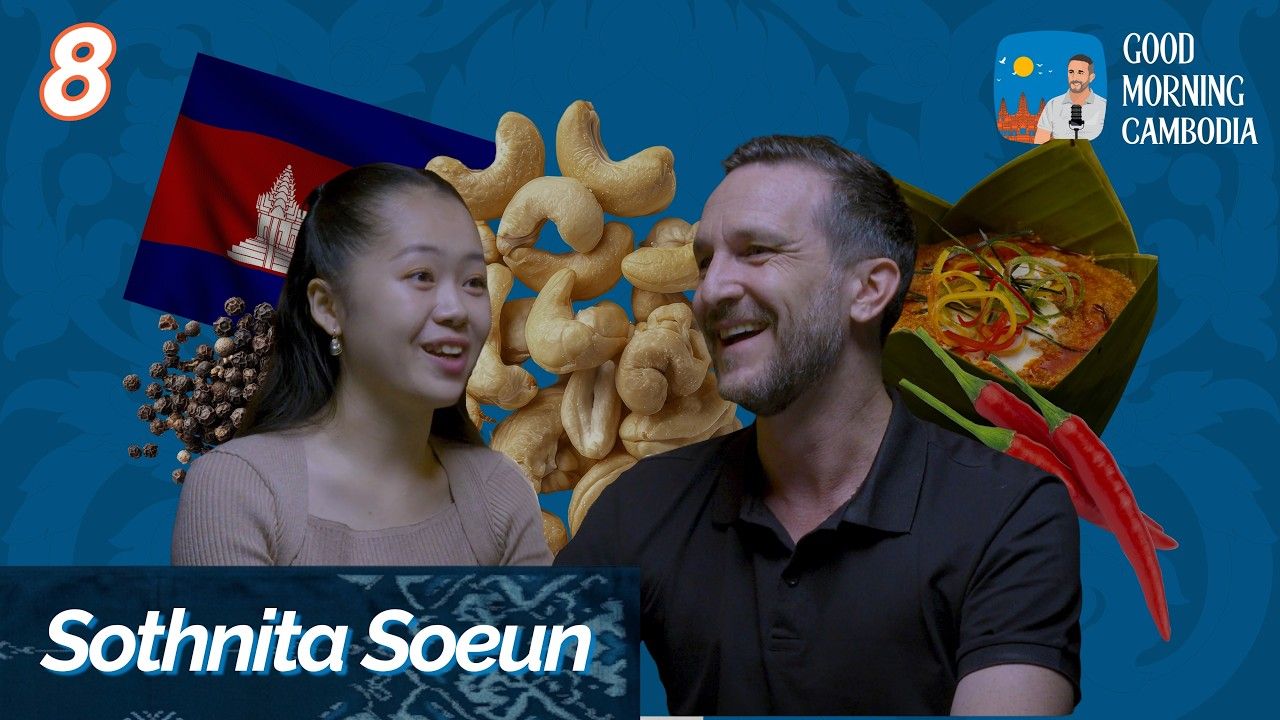
About this episode
Jesse McCaul talks with Sothnita Soeun, known as Ms. Cashew, business development director of her family's company Handcrafted Cashew Nuts Stung Treng. She explains how a family trip to her mother's home province during COVID showed them that Cambodia processed only about 5% of its cashews locally, and how the business grew from five employees and 100 kilograms a day in 2021 to about a ton a day, working with 202 contract farmers and exporting to Japan and Hong Kong. They also talk about new flavors, hosting overseas buyers in Stung Treng and her hope to see more Cambodian women in leadership.
Where the stories happened
See them on the story map →Chapters
- 0:00Introduction
- 3:36Stung Treng and the Mekong River
- 6:43A COVID trip to her mother's hometown
- 15:10Starting small with grants and five staff
- 19:12Contract farmers, capacity and first exports
- 23:53New flavors from tom yum to Kampot pepper
- 29:23What makes Cambodia special
- 33:06Hosting partners with cashew dinners
- 39:43Cashew quality and the World Cashew Conference
- 44:15Hopes for women leaders and the industry
From the conversation
we have a very small capital so we just build small manufacturing with just five employees during that times and a very small machines that can only process 100 kilogram per day
my moms and dads visit the world cashew conference so they brought like a luggage of cashew nuts right like no one no one from Cambodia brought the cashew nut only us
I want more Cambodians women to secure to assumes the leadership roles in either business organizations especially in governments because empower women's is like the it's like fostering the economies and also you know the country.
Read the full transcript
0:06 Why Cambodia? Right. Yes. So I said like so what make Cambodian special is the people itself. That's right. That's right. So like most of my foreign friends that have visited Cambodia, they always like mentions like so they highlight like the warmth of the people, the kindness, the resilience, the growth that we have and especially the strong sense of the communities that define Cambodians. Okay. So go through those again one more time. The warmth, the warmth of the Cambodian people. Yes. The kindness. Kindness. The friendlies.
0:44 And kindness is including, you know, like the generosity, the generous attitude. Yeah. Outgoing attitude. Right. That's right. That's right. Okay. Kindness. And then the growth. The growth. Like when they came here, they see like, okay, Cambodia is not like in the past. We are different. We are developed right now. Right. Yes. They see the difference.
1:01 Yeah. Yeah. Yeah. The resilience and also the strong sense of the communities like So the resilience that you know life's not always easy and that's around the world to be honest. That's just life. Good morning, Cambodia.
1:17 It's a wonderful day to be alive, especially right here in the Kingdom of Cambodia. we're here to bring you some good news, good things that are happening here. We are alive and well and every day wake up excited. amazing opportunities, amazing people and hopefully you can join us as we discover, explore some of the amazing things, amazing people happening right here in Cambodia. you know in life there's various I guess you could say ups and downs but you could also say there's there's plenty of good things happening and we love to zoom in on those good things happening and you know Cambodia as a as a country we can talk about the significant achievements of the past we can talk about the bright future of Cambodia but today we're also going to spend some time talking about what's happening here, right here, right now. And this morning we are privileged to be with Miss Sothnita. Her nickname in English is Cashew. for those of you that don't speak, if you want to call her in English, Cashew Nita and Nita is the business development director of handcrafted cashew nuts Stung Treng. Now in that mom is the chairwoman and dad is the managing director as well. and so of course your family Nita have founded and grown handcrafted cashew nuts Stung Treng and we're going to jump into that a little bit and talk about that. But it's great to have you here this morning Nita. Thank you. Good morning Jesse and of course good morning ladies and gentlemen that watching this podcast today. So I would like to introduce a little bit about myself again or in short people call me Miss Cashew the yes of course the business development director of handcrafted cashew nuts Stung Treng and so we was found we as a family business was found in October 2021 during the covid 19 that's right in the middle of covid
3:36 right yes of course and maybe before you jump into that I want to I want to strang some people might be famili familiar with Stung Treng if you are baba own Khmer of course but a lot of people listening what is Stung Treng so Stung Treng is a province it's about 450 5 kilometers from Phnom Penh to the northeast of Cambodia next to Laos border northeast of Cambodia next to the Laos border yes and in that province you also have of course the Mekong River that flows through it as well right yes and the thing is it was my mom's hometown over there okay so that his mom's hometown up in Stung Treng Province. quite far up north. I mean even a lot of Cambodians that maybe live in Phnom Penh or live in some of the southern areas of Cambodia, they've never visited Stung Treng potentially. Right. Yes. Yes. That's right. Yeah. And we're happy that you know some people never visit Stung Treng but once we set up our business over there we like brought a lot of guests tourists like even foreigners to visit our location Stung Treng of course. Yeah. So it's about 450 something kilometers north of Phnom Penh the capital city. And how many hours does it take to get up there? it's take around seven hours. Okay. So it's a bit of a drive. Yeah.
5:00 Yeah. But it's a nice road actually and it's a nice drive. I've been up there many times. Yes. And enjoy the views.
5:06 Yeah. The view is beautiful. Right. So we have the Mekong River that comes through. We have the border with Laos as well. Right. Yes. on that border we have the beautiful waterfalls. Well-known waterfalls there. A lot of Cambodians visit. A lot of Cambodians hope they can visit up there as well. So okay. So, so handcrafted cashew nuts Stung Treng. So, cashew nuts. So, there's farming agricultural areas up in Stung Treng. Is that is that what it is? Tell us a bit more especially for those that don't even know you know, okay, they know Stung Treng. Okay. Okay. Northeastern province next to Laos Mekong River but is it is it agricultural area up there or let's talk a little bit about that.
5:57 Yes. So because Stung Treng has the Mekong River along the side. So it is like the benefits of the for the people to grow many crops like bananas or mangoes, casava also like rubber trees and especially the cashew nuts. we also produce a very high quality of cashew nut as well. Interesting. And sunshine. Yes. Okay. So, it's it's farmland. It's farming area especially up there. Yes. And even the temperature, the weathers like it's all advantage for the farming. Interesting. Interesting. Okay. And then and there's a lot of farming up there, right? Yes. But in particular, something that you and your family discovered is it's particularly good soil environment for cashew nuts.
6:43 And this is your mom's homeland, right? Yes. And so yeah, tell us a bit 2021 what happened? What was how did this all come together? So actually before we stepped into the agriculture sector, we were in the tourist industry. So my dad was the general manager in hotels in Siem Reap actually we live in Siem Reap for almost 20 years. Yeah. Yeah. Yes. And there's a lot of tourism there.
7:08 Yes. Yes. Yeah. Yeah. And my mom was the suppliers to restaurant and hotels. But then, you know, comes so no more tourists.
7:15 Everything closed, hotels or something like that. Your dad's a general manager for one of the big hotels up there. Your mom's supplying, you know, a lot of the hotels up there. But then all of a sudden, COVID, no flights, no tourists. That's right. What are we doing at this hotel? It's empty. Right. Yes. So, we took a one week vacations to Stung Treng back to the homeland. Yes. Visit our grandparents over there. And then my grandmom and my granddad they like tour us around the communities. They show us the farmers how they cultivate to different many farms and we learn a lot of things especially the challenges that the farmer faced during the times like the middleman or the climate change something like that right and we did some research you know so we found that Cambodian was the largest producers in the world so we produced say that again say that again so Cambodia's was the largest cashew producers so in the world yes we produce like 1.8 millions this is the 1.8 million tons. Yes. Tons annually back in I think around 2020 or 2021 the data but only 5% processed in Cambodia while the other 95 like export as raw materials to the neighbor as the raw materials. Yeah. So 5% process. That's right. And then we lost the value added here. So we thought like why not do something that support the farmers and also support the like the peoples living in this these communities. Right. And the thing is we need to develop their skills, the skill development. So we thought so that they can sell more than just the raw materials. Yes. Yes. And then we like okay let's do it. Let's try something. Maybe we can step in the agriculture sectors. And then we did some research because we don't know anything about the this was this is the result of your
9:04 vacation back to mom's homeland. Yes. And because co you know not much was happening in the tourism sector. And so let's go to the homeland. Let's meet grandma and grandpa. And after, you know, talking and looking around, meeting people in the villages, meeting the farmers, you realized, wow, something needs to be done here. And maybe even though we don't have that background, maybe we could do it.
9:31 Yes. Yes. Right. Yes, that's right. And actually, I love we love we love the communities, we love the environments, and we love like helping people's, right? you know since I was in grade ten I established one of the youth charity for kids smiles just like a small team that support children's y and then after seeing all of these challenges that the farmer face we thought something more need to be done like just like you mentioned earlier yeah not just the children but the farmers so when you were in 10th grade you created charity a charity yes yeah what was that charity again the name is youth charity for Kids smiles youth charity for kids smiles and that was in Siem Reap at that time.
10:14 Yes. Yeah. That was in Siem Reap. Ah and you started this founded this your own initiative.
10:20 Mhm. And what did the charity do like we get it fund the fund from the parents from the schools from teachers and from other students to support the disadvantaged childrens in the rural communities. Yeah. like supporting the school materials even like the libraries like the teaching materials to the teachers like that. Wow. so you're able to yeah you're able to mobilize some people, mobilize some donations in order to support both schools and you know enhancing their libraries and school supplies and then also working directly with underprivileged students that needed help with their school supplies and things like that. Yes. And then I found like I can do something more and that's how we established the company and we connect them together. So our company also do charity every years as well. Wow. So you still you still continue to do even though you're just a new startup but you continue to do have to keep doing it. Yeah. Yeah. And I want to I want to say this, you know, this is this is one of the best ways that the world can work is it's easy for any of us to see something that could be done or should be done. And it's easy for us to observe and say, you know, somebody really should do something about that. and of course there can be commercial and business opportunities in there as well. But oftentimes it starts with somebody really should do something about that and then it comes to the question of well why not us why not me right and that's part of my story how I ended up in Cambodia as well you know that Cambodia you know had gone through genocide and civil war and destruction and then the country was in the beginning years of being rebuilt and the government was inviting people to come and take part in rebuilding the country. And so is the same thing that somebody should take part in that. Somebody should come
12:28 alongside the government and work with the government to help rebuild the country. And then the question, well, why not me then? And right, you know, and that's that's how that's how it happens. Yes. Yeah. So that family vacation, that family holiday back to the homeland northeast Cambodia, Stung Treng Province, that showed you something that could be done, should be done in the cashew industry, which Cambodia is the largest producer of cashew nuts in the world, but only 5% are processed in Cambodia. something should be done there and that's that's where you and your family decided well we could we could probably do that even though it wasn't your area of expertise or your background right yes and I can see the difference because right now we increased the processing in Cambodia right now 10% process in Cambodia so 2021 at that time it was 5% and together with your family of course and others as well and others as saying we can do this.
13:39 It's already increased in just a very short time to 10% being processed here in Cambodia, including handcrafted cashew nuts Stung Treng, right? Which is your guys' baby now, right? And it's not a baby now. It's becoming a big child now, you know, teenager now. okay. That's that's that's incredible.
13:59 Nita, how old are you, by the way? right now I'm 22 years old. I just graduated from my bachelor degree. Okay. Wow. Congratulations. Yeah, I saw that. Of course I knew that. But yeah, congratulations. Congratulations.
14:10 H Okay, so 22 years old, you were born in 2002. 2002. Yeah. And so now you're on this new journey together with your family. And it's not just with your family now, it's with of course your team and of course with my farmers, the community. Yeah. The farmers up in up in Stung Treng as well. And then you've had a lot of wonderful people globally come alongside as well in you know supporting and we were just talking earlier about you know here in a short time mom and dad are going to be hop mom's going to be hopping on a plane to Europe you're going to be hopping on a plane to South Korea and there's a lot happening there's been a lot happening in the last just few years here since 2021 October 2021 Right. Is that right? Yes. Yes. So almost the end of Octo.
15:10 And so you saw something should be done. The end result now is again what we call handcrafted cashew nuts. Stung Treng. So Stung Treng is the region. cashew nuts handcrafted. What is that all about? Okay. Actually we start very small.
15:30 Yeah. So we just want to do like the thing is we the mission is to support the empower the local farmers and prospering the inclusive economic growth in the communities while also like providing the high quality cashew nuts to the global market but because we that's a big dream but it's not easy. Yes, it's not easy. That's not easy you know from farmers to international market that's not easy. Yes. And we also have like financial constraint over the during that times you know we have a very small capital so we just build small manufacturing with just five employees during that times and a very small machines that can only process 100 kilogram per day 100 kilograms a day a little bit of process just small working with the farmers a little bit right and then we applied for grants you know so we apply for the USDA Khabasu and the other grants like GIZ's y and so we got supported actually we were not in their target area but we debate with them like why not Stung Treng you know Stung Treng produce like Stung Treng is the top four that produce the cashew in Cambodia so we have a lot of farmers over here we need to support them if you not come here like who support them if not us then who will do it so we secured the grant and then they told us like if you want to export it to the global market which is your target that like promoting the local products to the international market. If you want to do it, you have to certify like the international standard and you cannot stay small like this.
17:08 It's not just it's not just collect some cashew nuts from the farmers, process them a little bit and then just sell them around the world. It doesn't work like that, right? Yes, it doesn't work like that. There's many regulation that we have to follows.
17:20 So the consultants they told us like we have to build a new facility that's like follow the standard. So that's how we upgrade oursel into like big like manu factory big facilities and of course the name still the same the handcrafted. Yeah. Yeah. Yeah. Wow. Wow. What does handcrafted signify when you chose that word for your company?
17:43 because we think we just want to do something small cute design something like that. Ah so but you still retain that kind of like as one of your core values as well. Yes. That you know every product of yours is given special in attention I guess you could say right.
18:01 Mhm. Yes. And we want to keep thing like a bit traditional but modern as well. You see this is like modern but we keep the traditionals here packaging some packaging. Yeah. Yeah. Yeah. Okay. So fast forward to now. what you know let's talk about volumes of production now because this was in the end of 2021 that you started right and then you worked with you know had a little bit of capital of your own and then you lobbyed for some grants you know that weren't actually focused on your region but you're able to get you know a couple different international organizations to come alongside you and they you know worked with you on the whole process of you improving the the processing standards as well as making sure the farmers are well taken care of, trained and then beginning to prepare for international export. So as we come now to 2024, what type of volume are you guys producing nowadays?
19:12 currently we work very closely with 202 contract farming models. So both in Ratanakiri and also in Stung Treng province and so all of the farmers they have to like follow our code of conduct which is to no like child abuse no chemical use no bunting and also the deforestation-free practice and we you're working with 202 farmers at the moment. Yeah. Yeah. all across that northern region there. Yeah. Yes. And which is great agricultural land again. Of course. Of course. High quality.
19:46 Yeah. Mhm. And the capacity right now we are 400 tons annually maximum. 400 tons. Yes. So you were you started with processing of what was it? 100 kilos a day. 100 kilo a day. Up to around one tons a day. Up to one ton a day now. Yes. Yeah. Yeah. Yeah. Wow. In a very short time. in a very short time. And of course for us here in Cambodia Nita and your family and your company's cashew nuts are pretty well known. I personally of course have enjoyed them for the last several years and here in Phnom Penh quite well known but now in addition to that globally that you are exporting the best of the best or in the process of exporting the best of the best of Cambodia and of Stung Treng right and so and I know you maybe you can't share all of the details but I know you have some current international exports and then there's a lot of other conversations and discussions going on around the world that I'm sure will be fruitful here very soon as well. So maybe talk a little bit about you know some of the different countries that are interested. there's current you know you can't go into too much detail of course but you know that there's current discussions conversations happening and then there's also places that you're already doing some larger scale exports and then you've also done smallcale exports to some other nations as well so talk a little bit about that yes sure so we start our first export in 2023 just to Japans so right now we have three companies in Japan so one of is the largest that we are currently talking and we'll close the deal next month. Yeah. And it's going to be like a trading with them. So the this company they was established back in 140 years ago. So they're quite a large
21:54 company right now. Yeah. And we have two more companies in Hong Kong which we already start early this year as well for the Chinese New Year and we're going to start again for the Chinese New Year the upcoming one. Yeah. And we also they have the upcoming market like to the US and also two company in the US and another two company in the UK and we're going to develop new branding and also new flavors for them. Wow. So different flavors for different markets. That's cool. talk about talk about flavors a little bit and you know because okay people know you know cashew nuts and people enjoy you know opening a can or opening a bag of cashew nuts some snacks or you know but talk about a little bit about the flavors what have you done with the flavors and I know you have a couple new flavors coming up as well but talk a little bit about that because I'm a person who love eating snacks actually yes mom always like purchasing a lot of snacks at home so right and by the way that Part of that is a little bit of our Cambodian culture here as well, right? throughout the day and you know for those of you who have never visited Cambodia, come visit us and you'll see. Yeah. Throughout the day there's all these little snacks sometimes, you know, fresh fruits and nuts and sweet and sour and all kinds of little snacks really throughout the day for a lot of people. it's kind of part of our culture. Of course, some people are, you know, they have certain, you know, health or diets or things that they have to pay attention to, but really if you talk about traditional Cambodian culture, a lot of it is snacking throughout the day, right? Yes. We love eating snacks like before
23:36 lunch, after lunch, like that before dinner, after dinners, like you mentions like throughout the days. Yeah, that's right. That's right. Yeah. So, so let's talk about these flavors. And this came from, of course, you know, some of the ideas for the flavors came from your enjoyment of, you know, unique flavors and snacks and things like that as well.
23:53 Yes. So, normally in Cambodia, they only eat like people only eat the, salt or unsalted cashew, right? So, that's what you have right here, right? Yes. Okay. So, this is the roasted unsalted cashew, right? This one is the light salted. Lightly salted. Yep. Yes. And because I mentioned like I love snacks. Yep. And I also want to like develop the brands and making you know the trends. Yeah. In Cambodia. So we thought like why not coming up with different flavors right? So that's how we doing the research development and come up with the tom yum the spicy ones and also the cinnamonss and the milk cream. The cinnamon one is like very popular in Europe. Even though we not yet export to Europe, but like most European that taste our products like they love the cinnamonss. They said it's it's go perfectly with taste. They remind it's remind them of like the Christmas or something. That's what they told us. Yeah. Yeah. Yeah. Of course. Of course. Okay. So, you have cinnamon, you have milk cream. Okay. So, that's a bit of a little bit of a sweet taste as well. A bit. Yes. Just like sweet. And mostly children like that one. Ah, interesting. Interesting. And then you have spicy cashew as well.
25:08 Yes, spicy. So we bake it with the fresh ingredient like chili, lemongrass, lime leaf, something like that we found in our farms, right? Yeah. So locally sourced. So that's it's kind of a bit of a exotic flavor, right? Spicy. And the thing is like people said when they taste the spicy they said it remind them of like local taste. Yeah.
25:33 It's so local taste. Yeah. Yeah. Yeah. That's unique. And then you have tom yum flavor as well, right? Yes. Tom yams. A little bit of spicy and sour. Ah.
25:44 It's a unique one. Yeah. That's that's unique. That's unique. And then you have a couple new ones coming out soon as well, right?
25:50 Yes. Yeah. I can tell a little bit. So, we have the camera. How much can you tell? Yeah. Tell us.
25:55 So, we're going to have the caramelized gum cashew and also the black pepper cashew. Wow. Got black pepper cashew. Yes. So, you have the caramel caramelized. That'll be nice. That sounds quite nice as well.
26:06 it's it's sweet and it's like candy. It's very crispy outside and it's soft inside with the cashew. So, it's it's very unique. Interesting. And then the final one is black pepper, but it's Kampot black pepper. Kampot black pepper. For those of you that don't know, Cambodia is worldrenowned for its Kampot pepper and, it's used by the best restaurants around the world. Celebrity chefs swear upon it and it's it's it's it's a treasure in high demand and considered the best pepper in the world. And so, you're doing a combination of the best cashew nuts together with the best pepper, right? Yes. Oh, so okay. So if you can imagine the taste of yeah nice Stung Treng cashew nuts together with Kampot pepper.
27:01 It's gonna be amazing. Yeah, sounds great. Sounds great. Wow. So a lot has happened in the last several years here and you know for a lot of people Nita they don't they haven't had the chance to really be familiar with Cambodia. we're talking a little bit about some of the kind of the culinary treasures the food treasures of Cambodia that some people may not have been aware of. so this is a introduction to some of the treasures of Cambodia in the food sector. But in addition to that Nita you're you know you're 22 years old. You speak English fluently. Actually you know we never spoke in English before I think this podcast this morning. We always speak in Khmer to each other. but you speak English fluently.
27:57 You've traveled to a lot of countries now. Quite a few. Right. Quite a few. Yeah.
28:03 And you have a lot more on the list, too. I know you're busy. and there, you know, sometimes people who haven't had the chance to visit Cambodia, they're not quite sure, you know, is Cambodia is it is it visitable? Can we visit Cambodia? You know, if I go to Cambodia, am I going to be just riding like on a buffalo cart to go everywhere? Or, you know, is it safe?
28:37 And, you know, are there friendly people there? Are there nice sites to see? and I know that you've traveled a lot. You've met a lot of people. Some people were familiar with Cambodia. Some people weren't so familiar. and you've brought a lot of your different business collaborations to Cambodia as well and visited of course Phnom Penh Siem Reap but then also of course Stung Treng as well. So maybe talk a little bit about that about our country of Cambodia and where you know who are we in Cambodia here and are we you know is Cambodia friendly? Is it visitable? can business be done in Cambodia?
29:23 Let's let's talk about that a little bit. Sure. So actually you know I like travel a lot to other countries, right? And I always like when I whenever I meet people, I always invited them to visit Cambodia. Please come to Cambodia. And I said like so some people ask, "So what's make Cambodian special?" Yep.
29:40 Yeah. Why would I make like list them on our like travel list something like that? So if I'm going to travel somewhere and you know I have my you know whether business trip or even just a personal trip. Why Cambodia? Right.
29:53 Yes. So I said like so what make Cambodian special is the people itself. That's right. That's right. So like most of my foreign friends that have visit Cambodia, they always like mentions like so they highlight like the warmth of the people. Yeah. The kindness, the resilience, the growth that we have and especially the strong sense of the communities that define Cambodians. Okay. So go through those again one more time. The warmth, the warmth of the Cambodian people. Yes. The kindness. Kindness.
30:23 The friendlies. And kindness is including, you know, like the generosity, the generous attitude. Yeah. Outgoing attitude. Right. That's right. That's right. Okay. Kindness. And then the growth. The growth.
30:34 Like when they came here, they see like, okay, Cambodia is not like in the past, we are different. We are developed right now. Right. Yes. They see the difference. Yeah. Yeah. And the resilience and also the strong sense of the communities like So the resilience that you know life's not always easy. And that's around the world to be honest. That's just life, you know. Life's not always easy. But in particular, our Cambodian people have been through some very, very challenging things in the past. Yes. But there's still a resilience there. Mhm. And then finally, the strong sense of community. Strong sense of community. Cambodian, we help each others.
31:07 Not just friendly to foreigners, but we help each others. Yeah. That's that's like define our Cambodians. It's very true. Yeah. that you know I mean even your obviously your business with you know handcrafted cashew nuts Stung Treng that part of your initial focus and still part of your focus is okay we have something that we can do but we need to do this together with our bump and our our farmers and the community as well right yes and also you know the environments the natures that like make us feel connect with them as you can see the pictures here it's the ancient temples you know all of those things so it attract people that's what make Cambodian special itself yes and talking about like business because we as I mentioned we like we were in tourist industry before right and right now we were in we are in the agriculture sectors y so at ACST we strive to like you know reflect on the hospitality and the connections yes so we're not just making the we're not just building the business relationship but we are building the strong and healthy friendship with our partner.
32:22 Right. Right. So we make sure which makes it more enjoyable. I mean you know business is business and you know there's agreements and contracts and there's negotiations and all of that more open but you bring kind of the Cambodian flavor to your business that hey you know we're going to do business. And oftentimes in Cambodia they say, you know, let's be friends first and then business partners, right? You know, and so that's oftentimes an attitude of like, hey, you know, we want to show you our Cambodian warmth and kindness and our hospitality as our business partners as well, right? Yes. Yes. You know, so whenever our part like our partners, our guests once they step into Stung Treng, our communities, we make sure that they feel value. Yep.
33:06 So we for example we set like the formals welcome dinner at our factories. Okay. So you know international guests from wherever you know from Japan from you know South Korea from Europe, states, Australia wherever. So they have come to you know at your invitation you know probably and they want to meet with you guys of course and then they want to explore you know some business collaboration and so you bring them up to yes where do they fly into usually normally they land in here overnight and then we of course we tour them around the city a little bit like show them oh this is the royal palace this is the national museum something like that Then we tell them of course the like the history of Cambodians along the way to Stung Treng.
33:56 Yeah. Yeah. Yeah. And of course we show them like this is Mekong River and what are these what are this like you know deeply conversation about Cambodians right? So there's Yeah. Cuz you're you're driving up you know and so you have time to talk about the sites and history of Cambodia and all of that. Yes. And once we arrive in Stung Treng Y and then we have like a formal dinner setup as a welcome dinner. we like it's it actually like you know to how to say like how is it like break the break the ice. Yes. Yeah. Break the ice so that we can be more like friendly and closely together and then like create the interactions and after that we also like show them around the communities with the peoples the farmers. So these are the farmers that are growing the cashew nuts. These are you know as we're you know processing and and working with you to supply cashew nuts. These are the people that are actually growing them and farming them and provide them like the insightful of like deep to our work. Yeah.
34:58 And after work of course we travel to Siem Reap, show them the ancients temples, the other environments, the this like all of those places, the ancient sites and things like that. Yeah. Yeah. So when they show up for that welcome dinner at your guys's offices there in Stung Treng and it's a nice meal of what 10 people, 15 people, something like that, right? Yes. And every food like cooked with cashew every food cooked with cashews. Really?
35:29 We have our chef. So actually well my family in general we were in the tourist we are in tourist industry, right? I have like four uncles. Yeah. Yeah. And they all chef.
35:40 Really? Yes. My they are western chef. I have a Japanese uncle who is Japanese chef. western chef, Asian chef. bakery.
35:52 Yeah. So your four uncles, they're all chefs. One is a western chef, one is a Japanese chef, one is Asian chef. Asian chef, and the fourth one is a the bakery. Oh, he's a baker. Yeah. Yeah. Oh, actually five. Sorry. Another one is the F&B manager. Don't forget your fifth uncle. Yeah. Sorry. He might get upset.
36:10 He might get upset. And so the fifth one is the FB manager. So working together all together as a team, you can provide some great, you know, welcome dinners. And every dish is made with cashews. What are some of the dishes? I'm I'm curious. What are some of the dishes? For example, we make amok. So we still like we still connect between the our traditional dishes together with the western but designed in the western styles.
36:38 Is it amok usually or Yes. Amok from Sanang which is from the make some very nice fish up there. Yeah. Yeah. Yeah. Freshwater fish up there. Amok is Cambodia's national dish you could say. Yes.
36:51 if you come to Cambodia you have to try amok. and if I get lots of visitors coming over and working with my myself as well and they ask you know okay I'm here I want to try Cambodian food. There's lots of Cambodian food but starting with amok and you can do you can do you can do chicken amok you can do pork amok you can do beef amok but especially fish amok yeah is the most popular but you do it together with cashew nuts as well. Yes. Yes. So we have like amok so plate it like small as a starters and then we have the main dish also with cashew and then we have like so what would be the main dish for example last time we have the chicken breast something fill in with the cashew and something I'm not sure I forgot actually so far grown chicken right you know from the farms around there drying somewhere and then the am the fish amok is I'm sure it's It's nice. Stung Treng river fish there is very nice. And what else? And we also have like soup you know korko. Yeah. Yeah. Yeah. So we actually we make different soups.
38:00 It's another Cambodian dish. Very nice. On different occasions. So sometime we make korko but we like crunch it like mix it blends it. Yes. Yeah. and then of course we put like cashew on the tops or something. And then we have the dessert. These are of course like for example cheesecake or brownies or other cakes that make with cashew as well. Ah cool. So we want to make sure that we want to show them that every food on the table right now it's made from cashew. Wow that's cool. That's cool. I am I wrong? I heard that you can actually and I know that I don't think you do it but I know that you can also do like cashew fruit drinks as well. Is that right? Yes. Yeah. Yeah. Yeah. Yeah, we also make them for them.
38:45 Oh, really? Yes. What? What is that? What is that? it actually like the soy bean like milk like cashew milk like that. Ah, so it's kind of like a milk, right? But it's made out of cashews.
38:56 Cashews. Yeah. Interesting. It's very healthy. And everyone love our cashew milk.
39:01 Yeah. They said like so, so this is the reasons. Yeah. when the a few Americans buyers visit us, I think back in early this month or last month actually. So they said, "Well, this is different cashew milk from what I've tasted before." Yeah. Yeah. Yeah. You said like the other ones, the previous cashew that I taste, they taste like water. Yeah. And they even ask like what is the recipe or something like that. And of course, we can't share the recipe, but we just said like this is 100% recipe. Yeah.
39:33 This is like 100% cashew milk. Y I think because they add a lot of water, but we add more cashews. So that's why the taste is different. Yeah. Yeah. Yeah.
39:43 And it's natural made. Interesting. Nita, talk about a little bit about cashew nut qualities globally. Cambodia is not the only country that grows cashew nuts. There's there's we're the largest producer. but talk about in particular maybe the quality of cashew nuts especially like you talked about up in the northeastern regions the best for growing cashew nuts. Talk a little bit about the quality of cashew nuts that we're providing. And there's just like with any agricultural product there's there can be you know kind of low quality there can be medium quality there can be high quality. tell me a little bit about where the quality of Cambodian cashew nuts especially up in the northeastern region especially if they're grown properly you know chemical free and things like that. where does the quality of our cashew nuts here in Cambodia stand? actually the quality is also different depend on the regions the soils of course but I will say Cambodian qual quality in general it's very good and that's what I don't just say it myself but that's what I heard from people's as well right so like okay Cambodian cashews are very big especially this variety the M23 the M23 variety of cashew nuts it's very big it white it's very creamy it's rich in nutrition especially the omega3 three which is like help the health and the blood u prevent the blood pressure as well. Yep. Yep. And of course I wouldn't say the taste. You guys need to need to taste it yourself. Need to come and try it yourself. That's right. That's right. Yeah. But the size is larger. the health benefits of course are there as well.
41:39 And then of course the taste. The color is very good. Yeah. Yes. The productivity as well. so it's actually the present the percent presentation of the cashew is very good and that's what we heard a lot from the others like back in 2023 when vis my moms and dads visit the world cashew conference so they brought like a luggage of cashew nuts right like no one no one from Cambodia brought the cashew nut only us okay so this was at the world cashew conference yes world cashew conference in 2023 y back in Dubai in Dubai. Okay. Yes. Yeah.
42:15 So we thought this is the times that we need to promote our cashew because everyone in the cashew industry will come to this events. Right. Right. Right. So we brought it we shared to give away to every participants. Yep. During the conference and they said and that's the time when they said okay Cambodian's cashew deserve the recognitions deserve it its names like it's very good. It's very delicious.
42:43 It's very unique. And you know what? What? In 2024, they came to host the world cashew conference in Cambodia.
42:49 Cambodia. Yes. So that was that was because of them tasting, experiencing Stung Treng cashew nuts at the World Cashew Conference in 2023. Everybody there was able to experience them. They were amazed. And then they said, "Okay, 2024 World Cashew Conference in Cambodia." Wow, that's awesome. That's awesome.
43:14 Good news. A good move as well. Yeah, actually I won't just claim the credit for myself. There's of course other Cambodians peoples that attends of course the like the president of the association and also the president of the federations they of course they present they do the presentations of the like the cashew nut industry but the thing is if it's just presentation no one taste no one try it's like it's like no proof no evidence right this is the evidence just try it that's right that's right all right just try it just try it so nita as we finish up here, maybe just talk a little bit about what you see, for Cambodia, for the cashew industry, of course, and then of course for handcrafted cashew nuts, Stung Treng as well. What do you see in the next few years? what's your heart? talk from your heart, you know, what do you see happening in the next few years?
44:15 What's I know you have you know strategic plans and all of that but also what's your dream for Cambodia for the cashew industry and then of course for handcrafted cashew nuts Stung Treng as well actually I have a very big dreams of course not just for the cashew but for the countries and the thing is for its people for the people ourself so for of cashew we want Cambodian's cashew to be recognized globally for it taste and for the sustainable practice like the deforestation-free practice that right now most Cambodians business companies that trying to apply this so we don't have to cut down forests in order to plant cashew nuts basically right yes right so I myself we also adopt this models and of course I want to see like Cambodians you know to be developed and especially like the government's goal come true and that's what we want to see we want to live in the like a very developed country, right? Yeah. Yeah. Of course. Yeah. And of course and of course the educations and everything and especially it's like the people's Cambodian women's Yeah. in general. I want more Cambodians women to secure to assumes the leadership roles in either business organizations especially in governments because empower women's is like the it's like fostering the economies and also you know the country. Yeah. Yes. Yeah. And that's what I want to see actually women's good you know. Yeah.
45:54 And I can see it right now many women's becoming like the head of the company or startup the founders and very happy and even in the government side right now more women's coming. So yep that's very happy. Wow that's awesome. Nita give your invitation to all of those who are watching and listening. what's your invitation to them? Actually of course for our friends in the around the world I would like to invite you all to come to Cambodia. Please connect to us. you have to experience the warmth of the peoples, our richness in the cultural heritage and especially the you know the business opportunities for investors. Mhm. please come to Cambodia.
46:38 There's a lot of ancient temples, environment, the natural, you should connected to them. And if you come to Cambodia, please let me know. Let us know. I'll be delighted to be, you know, your host to arrange the u personalized schedule and, you know, like tour you around the country because I love travels and of course I don't mind traveling with you. Yeah. Yeah. Yep. Yep. Yep. That's right. And looking forward to see you in Cambodia, of course.
47:04 Oh, that's awesome. That's awesome. Yeah. Yeah. Well, you've heard it.
47:09 Please be our guest here in Cambodia. Thank you for your time with us. I hope we've added some insights as well as some warm conversation to your day wherever you are. And from Cambodia, we'll talk to you soon. Have a wonderful day wherever you're at.